Home›Sufism in the Deccan›Shah Raju Qattal Qadiri
The founder of the Qadiri silsila in the Deccan
A Sayyid of Bidar, trained in the madrasa sciences and the Qadiri chain
Hazrat Sayyid Shah Raju Qattal Qadiri (d. circa 1632) is the founding figure of the Qadiri silsila at Hyderabad and the ancestor of one of the city's longest-lived scholarly families. A Sayyid by descent — his lineage was traced to the Qadiri masters of Baghdad through Sayyid Muhammad Gisudaraz's spiritual brother Sayyid Hamza — he was born at Bidar and trained in the standard madrasa curriculum of his time: Quranic recitation (qira'at), tafsir, hadith, Hanafi fiqh and the Arabic and Persian sciences.[3]
A method distinct from the Chishti
Vocal dhikr, the Qasida Ghausia, and a close bond with the study of law
His Qadiri initiation came through a chain documented in the silsila records of the Hyderabad Qadiri family, going back through Sayyid Yusuf al-Husayni of Bidar to the master of the order, Shaykh 'Abd al-Qadir Jilani of Baghdad (d. 1166). The Qadiri method he taught was distinct from the Chishti method dominant at Khuldabad and Gulbarga: vocal dhikr rather than silent, a greater emphasis on the recitation of the Qasida Ghausia and other Qadiri litanies, and a closer integration with the formal study of fiqh.[2]
The hospice near the Charminar
The seat from which the great Qadiri families of the city descend
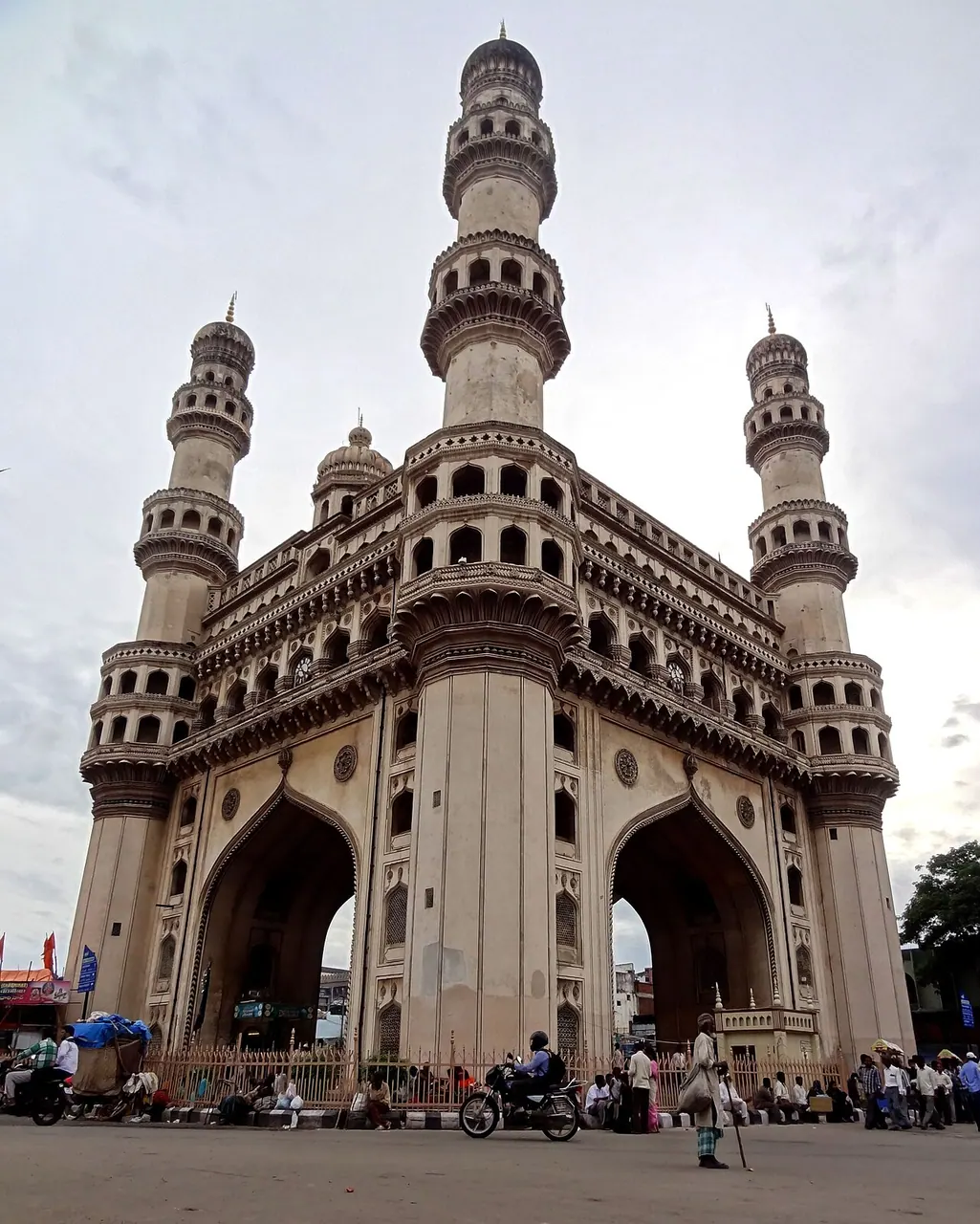
He moved to Hyderabad in the latter years of his life, during the reign of Sultan Muhammad Qutb Shah, and established his hospice in what is now the Misri Gunj area near the Charminar. His tomb there is still tended. His descendants and disciples founded several of the most enduring Sufi families of the city — the Hussaini lineage that produced the saints buried at Yousufain Sharif, and the Mahbub Subhani lineage that flowered in the later Asaf Jahi period. Through them, the Qadiri silsila became the dominant Sufi tradition of Hyderabad through the eighteenth and nineteenth centuries — a position it retains today.[1]
Shah Raju Qattal Qadiri in dates
- b. BidarBorn at Bidar a Husayni Sayyid; his lineage traces to the Qadiri masters of Baghdad through Sayyid Muhammad Gisudaraz's spiritual brother Sayyid Hamza.
- c. early 17th c.Trained in the full madrasa curriculum at Bidar: Quranic recitation (qira'at), tafsir, hadith, Hanafi fiqh, and the Arabic and Persian sciences.
- c. early 17th c.Receives Qadiri initiation through a chain passing through Sayyid Yusuf al-Husayni of Bidar, tracing back to Shaykh 'Abd al-Qadir Jilani of Baghdad (d. 1166).
- c. 1612–1626Moves to Hyderabad during the reign of Sultan Muhammad Qutb Shah and establishes his hospice at Misri Gunj near the Charminar.[1]
- c. 1612–1626Teaches the Qadiri method: vocal dhikr, recitation of the Qasida Ghausia and other Qadiri litanies, and a close integration with the formal study of fiqh — distinct from the silent-dhikr Chishti tradition at Khuldabad and Gulbarga.
- c. 1632Dies at Hyderabad; buried at his hospice in Misri Gunj, where the tomb is still tended today.[2]
- Post-1632His descendants and disciples found two great Qadiri lineages: the Hussaini line whose saints lie at Yousufain Sharif, and the Mahbub Subhani line that flourished in the later Asaf Jahi period.
- 18th–19th c.Through these lineages the Qadiri silsila becomes the dominant Sufi tradition of Hyderabad across the Asaf Jahi period — a position it retains today.
References
- ^ ^ ^ H. K. Sherwani & P. M. Joshi (eds.), History of Medieval Deccan (1295–1724), 2 vols., Government of Andhra Pradesh, Hyderabad, 1973–74.
- ^ ^ ^ Richard M. Eaton, A Social History of the Deccan, 1300–1761: Eight Indian Lives, Cambridge University Press, 2005.
- ^ Richard M. Eaton, Sufis of Bijapur, 1300–1700: Social Roles of Sufis in Medieval India, Princeton University Press, 1978.
Compiled and edited by Syed Azhar Farhan for Dakhni.org from the sources cited on this page. AI may assist research and drafting; see the editorial method, corrections log, and AI policy.
Comments
Comments are provided by Disqus. Loading them shares your visit with Disqus.