Home›Languages of the Deccan›Faarsi
فارسی
Faarsi — six centuries of high prose in the Deccan
From Mahmud Gawan's correspondence with the courts of Iran to the last Persian firman of the Nizams in 1885 — the language in which the Deccan governed itself, kept its records and signed its treaties.
How Persian came south
From the chancery of the Khaljis to the founding of the Bahmani sultanate
Persian arrived in the Deccan in the saddlebags of the Khalji and Tughluq armies. Alauddin Khalji's general Malik Kafur passed through Devagiri and Warangal in 1308–1310 carrying with him the entire diplomatic and administrative idiom of the Delhi sultanate, which was Persian. The pattern was unbroken across two centuries: at every Indo-Islamic court from Lahore to Bengal, the official language was Persian. The Deccan, brought into the same political world by Tughluq's conquest of the Yadava and Kakatiya kingdoms in 1318 and 1323, inherited the same chancery.
When Alauddin Bahman Shah broke from Delhi in 1347 and founded the Bahmani sultanate, he kept what he had been trained in. Persian was the language of the diwan, the language of the farman (royal decree), the language of taxation, of the courts of law, of diplomatic correspondence, and of the higher religious sciences. The chancery's official copyists, the munshis, were either immigrants from Iran or Central Asia or Indians trained in the Persianate tradition. The Bahmani inscriptions at Gulbarga and Daulatabad — many still legible — are in Persian.
What the new sultanate could not import was a native Persian-speaking population. Persian in the Deccan was always an élite language — written, recited, prayed in, but rarely spoken in the household even by the men who used it professionally. That gap between high written language and everyday speech is the structural fact that, three centuries later, would make room for Dakhni and then for Urdu.[1]
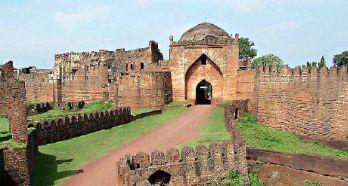
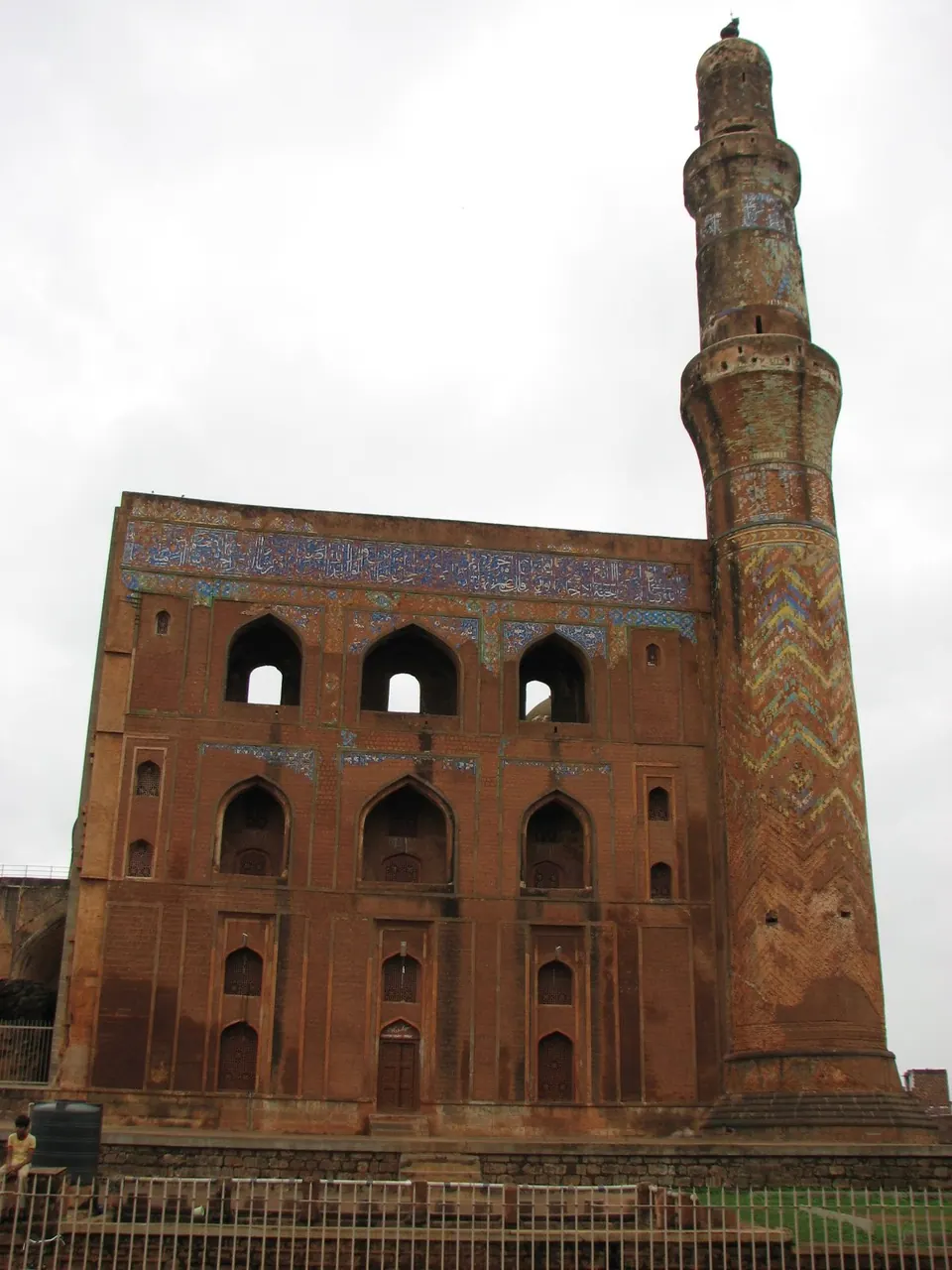
A wazir who wrote letters to Shiraz
The Bahmani prime minister whose Persian correspondence bound the Deccan to the wider Persianate world
The high noon of Persian in the Deccan begins with the arrival of Khwaja Imad-ud-din Mahmud Gawan at Bidar around 1453. Gilan-born, trained in the Iran of the Timurid late-summer, Gawan had come east as a merchant and stayed as a prime minister. Under sultans Humayun, Nizam Shah and Muhammad III he served as chief wazir from 1466 to 1481 and made Bidar the Deccan's most cosmopolitan capital.
Gawan's two surviving works are in Persian: the Manazir-ul-Insha, a treatise on epistolary style, and the Riyaz-ul-Insha, a collection of his own state letters to the Aq Quyunlu sovereign Uzun Hasan, to the Timurid Sultan Husain Baiqara at Herat, to the rulers of Egypt, to the religious scholars of Shiraz, Khurasan and Tabriz, and to the local nawabs of his own kingdom. The Riyaz survives in dozens of manuscripts and is studied to this day in Iranian universities as a model of Indo-Persian prose.
In 1471–1472 Gawan endowed at Bidar the great Madrasa that still bears his name — a three-storey Persian-style college modelled on the Khargird madrasa of eastern Iran, with a library reputed to hold 3,000 Persian, Arabic and Turkish manuscripts. It taught the standard Persianate curriculum: theology, law, logic, astronomy, medicine, mathematics, and the four diwans of Saadi, Hafiz, Rumi and Jami. For three decades it drew scholars from as far as Samarkand and Cairo. Gawan was executed by Sultan Muhammad III in 1481 on a forged charge; the madrasa stood, badly damaged but standing, into the twentieth century.[3]
When Isfahan sent its scholars south
Persian as the language of two Shia courts and an Iranian immigration
When the Bahmani sultanate fragmented after 1490, the two greatest of its successor states — the Adil Shahis of Bijapur and the Qutb Shahis of Golconda — both declared themselves Shia and turned their faces, religiously and linguistically, toward Safavid Iran. The first Adil Shahi sultan, Yusuf Adil Shah (r. 1490–1510), claimed Aq Quyunlu Turkmen descent; the first Qutb Shahi, Sultan Quli (r. 1518–1543), was a Persian-speaking Qara Quyunlu nobleman from Hamadan. Their courts spoke, wrote and prayed in Persian from the day they were founded.
The result was the largest single Iranian immigration to the Deccan. Scholars, jurists, calligraphers, doctors, astronomers, gunners and ulema arrived in steady stream from Khorasan, Mazandaran, Gilan, Astarabad and Isfahan, drawn by salaries, jagirs and the prestige of two functioning Shia courts in the same plateau. The chief minister of every Adil Shahi reign was, by tradition, a recent immigrant from Iran; the chief judges (sadr) of both courts were Iranians. The cultural style of the bureaucracy, the architectural taste of its buildings (the Persian pointed arch, the muqarnas, the tile-work of Gol Gumbaz), the food of the kitchens and the rituals of Muharram — all of it was set in Persian terms.
The Persian poetry of these courts is the unread half of Indo-Persian literature. Zuhuri of Tarshiz, who came to Bijapur around 1580 and was court poet to Ibrahim Adil Shah II until 1616, wrote prose and verse considered by Indo-Persian historians on a level with Faizi and Urfi of the Mughal court. Ghawasi at Golconda, Nusrati at Bijapur (later in his career), Mu'jiz Khan at Bidar — each left Persian divans worth several hundred ghazals apiece. Most have never been published.[1]
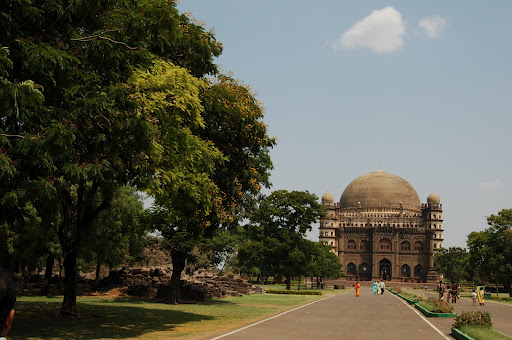
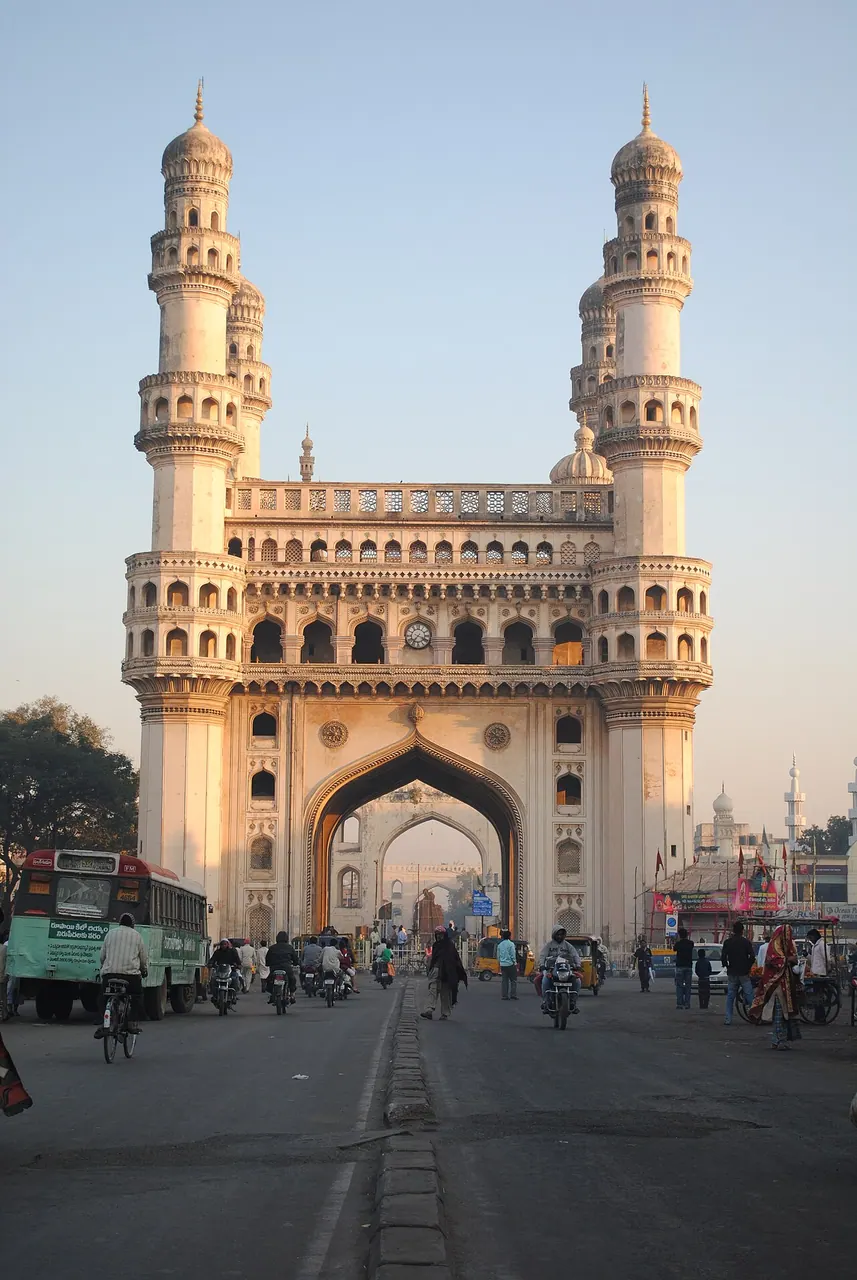
The Persian architect of a Dakhni capital
How an Astarabadi scholar gave the Qutb Shahi city its plan and its chronograms
Among the Iranians who came south in the late sixteenth century, the most consequential was Sayyid Mir Muhammad Mu'min Astarabadi, a Shia theologian from Mazandaran who arrived at Golconda around 1581 and served as Muhammad Quli Qutb Shah's Peshwa (prime minister) from 1585 until his death in 1625. He has been called, with reason, the Iranian who built Hyderabad in Persian.
Mir Mu'min was a polymath in the standard Persianate sense — jurist, poet, astronomer, urban planner. The 1591 plan of Hyderabad on the south bank of the Musi is credited to him: the four-arched Charminar as the cardinal point, the four bazaars radiating to north, south, east and west, the placement of the mosques and the diversion of the Musi for the city's water supply. The Persian chronogram for the founding date — which works out to AH 1000, 1591 CE — was his composition. Many of the inscriptions on the early Qutb Shahi buildings of Hyderabad bear his Persian verses.
His role was also religious. As the chief Shia jurist of the Qutb Shahi kingdom he organised the Muharram observances that have made Hyderabad's Ashura the largest in South Asia outside Lucknow. He corresponded with the Safavid clerical establishment at Isfahan and Najaf. He brought to Hyderabad, in a single generation, the entire bureaucratic, devotional and architectural vocabulary of late Safavid Iran — in Persian, on Persian terms, for an audience that would in time invent Dakhni to receive it.[1]
A history of the Deccan, written in Persian
Why every modern study of the medieval Deccan still depends on a Persian shelf
The Deccan owes to its Persian historians what the medieval Mediterranean owes to its Latin chroniclers. Almost every fact we can verify about the Bahmani sultanate, the Vijayanagara wars, the founding of the five successor states, and the religious and administrative history of the Deccan up to 1700 is preserved in Persian prose written between roughly 1590 and 1700.
The greatest of these is Muhammad Qasim Firishta, a Persian historian from Astarabad who lived at Bijapur from c. 1590 and worked there under Ibrahim Adil Shah II. His Tarikh-i-Firishta (also called the Gulshan-i-Ibrahimi, completed c. 1611) is a multi-volume Persian history of the Indo-Islamic world that devotes long, careful chapters to each of the Deccan sultanates. It became, in the next two centuries, the standard reference for European Orientalists; John Briggs's English translation of 1829 made it the founding text of Anglophone Deccan historiography.
Around Firishta stand a small Persian library of Deccan chroniclers. Sayyid Ali Tabataba wrote the Burhan-i-Ma'asir (c. 1595) — a Persian history of the Bahmani and Nizam Shahi sultanates. Rafi-ud-din Shirazi compiled the Tazkirat-ul-Muluk at Bijapur. The author of the Tarikh-i-Sultan Muhammad Qutb Shah (c. 1617) gives us most of what we know about the early years of Hyderabad. After 1687, Mughal historians like Khafi Khan and Bhimsen Saxena recorded the Deccan in the same Persian register. The Deccan's modern historians have spent two centuries reading these books.[4]
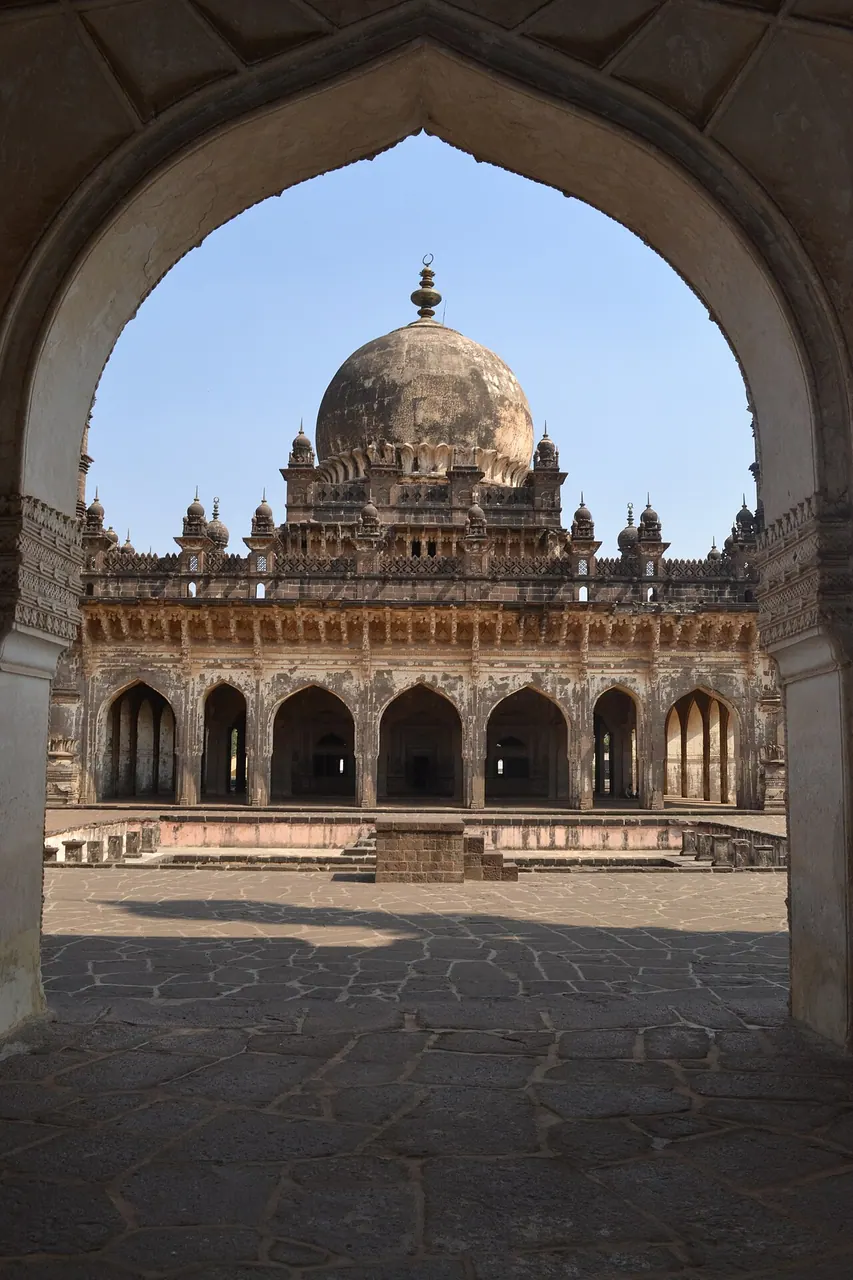
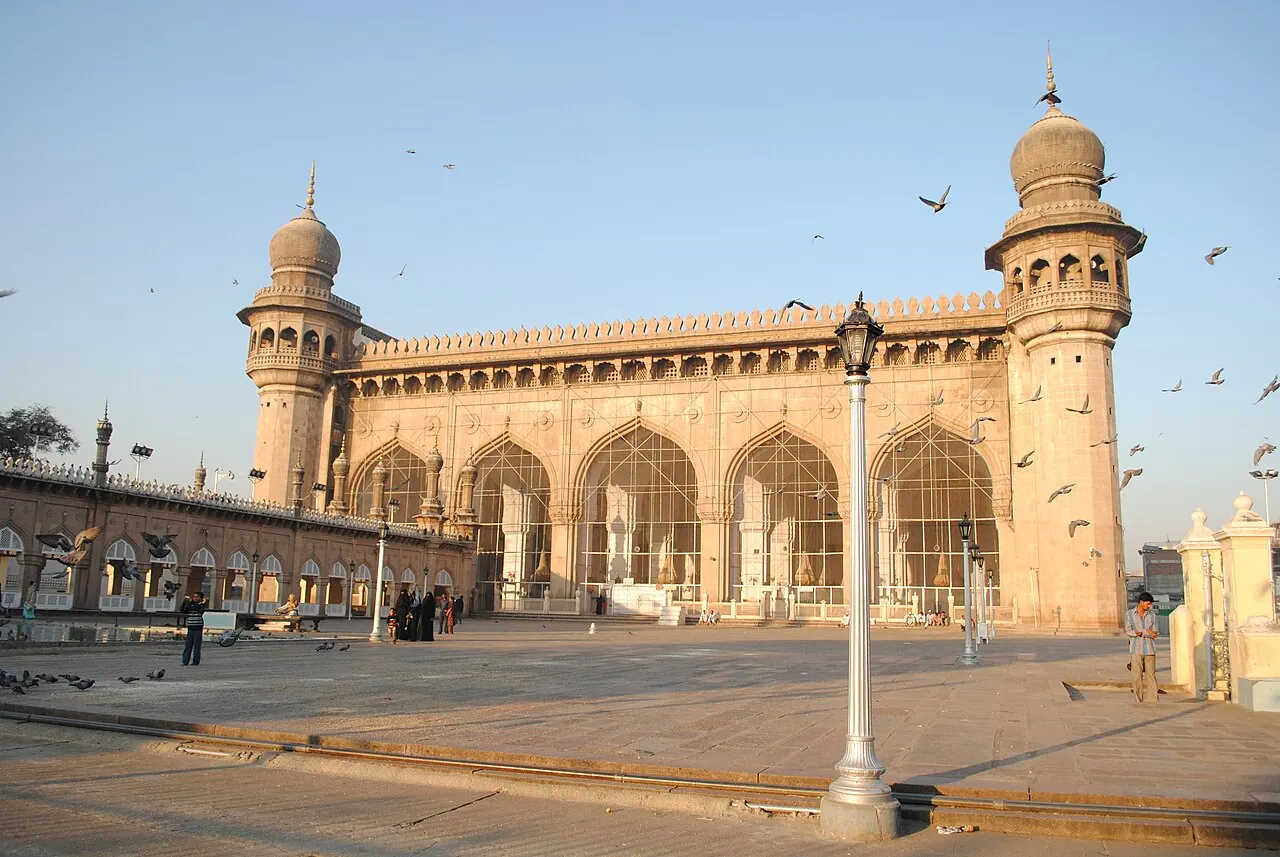
The last great Persian chancery in South Asia
A century and a half in which Hyderabad State remained an officially Persian polity
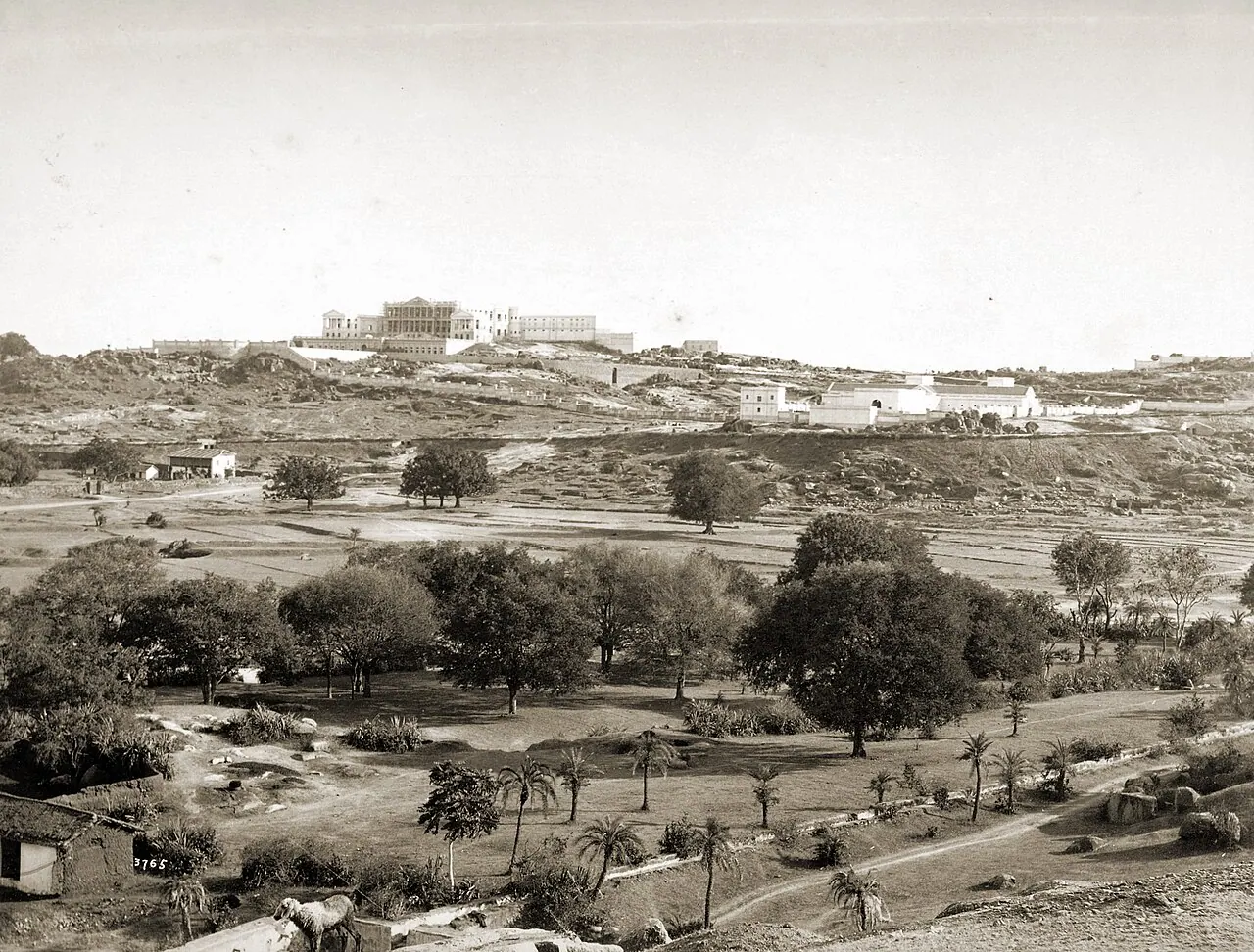
When Asaf Jah I founded the Hyderabad State in 1724, Persian was already in slow eclipse across the Mughal north — Urdu poetry was rising, English administration was creeping in at Bengal — but in the Deccan he kept the older order intact. Persian remained Hyderabad State's language of administration, of revenue, of the courts of law and of the diplomatic correspondence for the next century and a half. Every Asaf Jahi farman, every land grant, every judicial verdict, every official letter to and from the British Residency at Bolarum was issued in Persian until the 1860s.
The literary culture of Hyderabad State remained correspondingly bilingual through the eighteenth and nineteenth centuries. Persian poetry was still written and recited at the durbar; Persian was the language of the higher classical curriculum at the city's madrasas; the great libraries of the Asaf Jahi family and the nobility — the libraries that would later become the Asafia Library and the core of the Salar Jung Museum — were Persian collections first, Arabic and Urdu second. Hyderabadi gentlemen of the nineteenth century could be expected to converse in Dakhni at home, conduct business in Urdu, sign documents in Persian and pray in Arabic. The pattern is unique in South Asia.
The shift to Urdu came late and slowly. In 1884, Salar Jung I — the prime minister of Mahbub Ali Khan, the sixth Nizam — issued an order replacing Persian with Urdu as the language of the lower revenue administration; the higher courts followed by stages until c. 1900; Osmania University, founded in 1918, taught even the sciences in Urdu. The last official Asaf Jahi documents in Persian date from around 1885. After that, Persian survived in Hyderabad as a religious and literary language but no longer as the language of state.[2]
A language that survived inside another
Persian's afterlife in Urdu vocabulary, in inscriptions, and in the great libraries
By 1947 Persian had ceased to be a living language anywhere in South Asia. But it had not vanished — it had migrated. Forty per cent of standard Urdu vocabulary, perhaps more in literary registers, is Persian; almost the entire grammatical apparatus of polite Urdu correspondence — the izafat construction (shahr-i-Dilli, dast-i-shafqat), the honorifics, the diplomatic formulae — is borrowed unchanged from Persian. To learn Urdu is to learn, by stages, the better part of a Persian education.
The libraries of the Deccan are where the language is most visibly preserved. The Asafia State Library (now the Telangana State Central Library) holds some 9,000 Persian manuscripts; the Salar Jung Museum, perhaps 8,000 more; the Osmania University Oriental Manuscripts Library, the Madrasa-i-Aliya at Hyderabad and the Khuda Bakhsh Library at Patna together preserve the bulk of the surviving Indo-Persian textual tradition. The Tarikh-i-Firishta exists in dozens of beautifully copied Deccani manuscripts. The Iranian government, as part of a long bilateral programme, has digitised much of this collection over the last two decades.
Persian survives, too, in inscriptions. The walls of the Charminar, the gates of Golconda, the dome of Gol Gumbaz, the entrances of every major Bahmani, Adil Shahi, Qutb Shahi and Asaf Jahi monument, the gravestones of the Qutb Shahi and Paigah tombs — all carry Persian. A Hyderabadi who learns to read his own city's stones is, without quite intending to, learning Persian. The language is no longer spoken; it remains, in this strict sense, the writing on the wall.[2]
فارسی بِیں تا بِبینی نقشہائے رنگ رنگ
بگذر از مجموعۂ اُردو کہ بے رنگِ من اَست
"See my Persian — there you will find pictures of every colour;
pass over my Urdu collection, for it has not the colour that is mine."
— Mirza Ghalib · Delhi · c. 1840 · the last great Indo-Persian poet
From the Khalji chancery to the last Asaf Jahi firman
- 1310Alauddin Khalji's general Malik Kafur reaches the Deccan; Persian enters the plateau as the language of conquest and chancery.[1]
- 1347Bahmani sultanate founded at Daulatabad; Persian confirmed as the official language of the new Deccan state.[5]
- 1424Bahmani capital moves to Bidar; the chancery and royal library grow under Iranian-trained scholars.
- 1453Mahmud Gawan arrives from Gilan and enters Bahmani service; the high noon of Bidar Persian begins.
- 1472Gawan founds the great Madrasa at Bidar on the Khargird model; three thousand manuscripts of Persian, Arabic and Turkish learning.
- 1481Gawan is executed; his Riyaz-ul-Insha and Manazir-ul-Insha survive as the canonical model of Indo-Persian prose.[3]
- 1490Yusuf Adil Shah founds the Bijapur sultanate; declares for Shia Islam; opens the door to Iranian immigration.[1]
- 1518Sultan Quli of Hamadan founds the Qutb Shahi sultanate at Golconda; Persian-speaking court established.[1]
- c. 1580The Iranian poet Zuhuri Tarshizi arrives at Bijapur and serves as court poet to Ibrahim Adil Shah II.
- 1581Mir Mu'min Astarabadi arrives at Golconda; rises to be Peshwa and the Iranian architect of Hyderabad.
- 1591Muhammad Quli founds Hyderabad; the Persian chronogram works out to AH 1000.
- c. 1595Sayyid Ali Tabataba completes the Burhan-i-Ma'asir, a Persian history of the Bahmani and Nizam Shahi states.
- c. 1611Muhammad Qasim Firishta completes the Tarikh-i-Firishta at Bijapur — the founding history of the Deccan in Persian.[4]
- 1625Death of Mir Mu'min at Hyderabad; the high tide of Qutb Shahi Persian ebbs.
- 1687Fall of Golconda to Aurangzeb; the Qutb Shahi Persian establishment is absorbed into Mughal service.
- 1724Asaf Jah I founds the Hyderabad State; Persian remains the chancery language for the next 160 years.[4]
- 1829John Briggs publishes his English translation of Firishta — the founding of Anglophone Deccan historiography.
- 1837The East India Company replaces Persian with English in its higher courts in British India; Hyderabad State, independent, keeps Persian for another half-century.
- 1884Salar Jung I orders Urdu to replace Persian in the lower revenue administration of Hyderabad State.[2]
- c. 1885The last Asaf Jahi farmans in Persian are issued; the higher courts complete the transition to Urdu over the next fifteen years.
- 1918Osmania University founded; Urdu replaces Persian as the language of higher learning in the Deccan.
- 1948Operation Polo; Hyderabad State's Persian archives pass into the new Indian Republic's custody.
- 1968The Iran Society of Hyderabad and the Salar Jung Museum begin a systematic survey of Deccan Persian manuscripts.
- 2014Telangana formation; the Asafia State Library (some 9,000 Persian manuscripts) becomes the Telangana State Central Library.
- todayRoughly 17,000 surviving Persian manuscripts in Deccan collections; Persian is taught at Osmania, EFLU and Maulana Azad universities, but is no longer spoken anywhere on the plateau.[2]
References
- ^ ^ ^ ^ ^ ^ ^ Encyclopaedia Iranica, "Deccan i. Political and Literary History." ↗
- ^ ^ ^ ^ ^ Encyclopaedia Iranica, "India xviii. Persian Elements in Indian Languages." ↗
- ^ ^ Richard M. Eaton, A Social History of the Deccan, 1300–1761: Eight Indian Lives, Cambridge University Press, 2005.
- ^ ^ ^ H. K. Sherwani & P. M. Joshi (eds.), History of Medieval Deccan (1295–1724), Government of Andhra Pradesh, Hyderabad, 1973–74.
- ^ Encyclopaedia Iranica, "Bahmanid Dynasty." ↗
Compiled and edited by Syed Azhar Farhan for Dakhni.org from the sources cited on this page. AI may assist research and drafting; see the editorial method, corrections log, and AI policy.
Comments
Comments are provided by Disqus. Loading them shares your visit with Disqus.