- HyderabadFounded 1591
- BidarBahmani Capital · 1429
- GulbargaFirst Bahmani Capital
- BijapurAdil Shahi · 1490–1686
- AurangabadFounded 1610 · Mughal Deccan capital 1681–1707
- GolcondaQutb Shahi Fort
- WarangalKakatiya · 1163–1323
- NandedThe Tenth Guru's Home
- RaichurThe Doab Fortress
- NizamabadThe Hill Fort of Indur
Five Pillars of Dakhni Heritage A civilisation shaped by Sufi saints, warrior kings and a thousand intermingled tongues
History & Dynasties
From the Bahmani Sultanate to the Qutb Shahis and Asaf Jahi Nizams — six centuries of royal lineage that forged the Deccan's golden age.
Explore → II · ZubaanDakhni Dialect & Poetry
An early literary form of Urdu/Hindustani, born in the Deccan. Ghazals of Wali Deccani, verses of Ibrahim Adil Shah II, and the living Dakhni dialect of Urdu spoken today.
Read Poetry → III · KhanaFood & Cuisine
Hyderabadi dum biryani, haleem, marag, lukhmi, qubani ka meetha — born at the crossroads of Persian courts and Telugu kitchens.
Taste the Deccan → IV · MauseeqiMusic & Arts
Hindustani classicals from Golconda's courts, Bidri metalwork, Paithan silk weaving and the distinctive Dakhni miniature painting tradition.
See the Arts → V · PehchaanDeccan Trivia
Six centuries of Dakhni history in ten questions. Drawn from over 500 questions spanning dynasties, cities, saints, cuisine and language.
Find Out →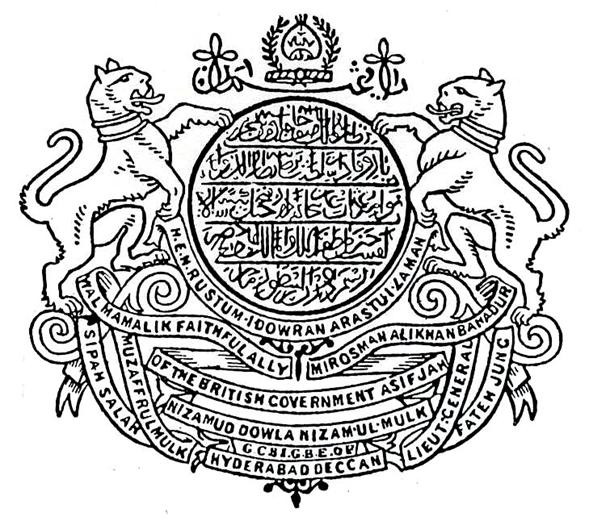
The Dynasties of the Deccan From Bahmani glory to Asaf Jahi grandeur
Bahmani Sultanate
Eighteen sultans across 180 years. Vizier Mahmud Gawan (1466–1481) built the great madrasa at Bidar and made the court a meeting-place for Persian, Telugu and Marathi scholars. The dialect we now call Dakhni took shape in their armies and bazaars.
Read More II · Founders of HyderabadQutb Shahi Dynasty
Seven sultans. Muhammad Quli founded Hyderabad in 1591 and wrote a substantial divan in Dakhni and became one of the Deccan's best-known sovereign-poets. Golconda-region mines and markets supplied diamonds later associated with famous stones including the Koh-i-Noor and Hope; the earliest ownership histories of individual gems remain uncertain.[1]
Read More III · Masters of MetalBidar Sultanate
Founded by Qasim Barid I, a former Bahmani minister. Smaller than its neighbours but a centre of Sufi scholarship and the birthplace of Bidriware — a black zinc alloy inlaid with silver, still produced in Bidar after five centuries.
Read More IV · Patrons of Dakhni PoetryAdil Shahi Dynasty
Nine sultans across nearly two centuries. Ibrahim Adil Shah II — poet, musician and author of the Kitab-i-Nauras — opened his court to Hindu and Muslim artists alike. Built the Gol Gumbaz, whose whispering gallery carries sound repeatedly around the dome.[2]
Read More V · The Last Deccan DynastyAsaf Jahi Nizams
From Mir Qamar-ud-Din (Nizam-ul-Mulk) to Mir Osman Ali Khan, who ran his own railway, airline and university and was, briefly, the wealthiest man on earth. Hyderabad State acceded to India in September 1948.
Read MoreFrom Bahman Shah to Mir Osman Ali Khan The dates that shaped the Deccan
- 1347Alauddin Bahman Shah breaks from the Delhi Sultanate and is crowned at Gulbarga, founding the Bahmani Sultanate.
- c. 1425–1429The Bahmani capital shifts from Gulbarga to Bidar under Ahmad Shah I; sources differ on the precise year.
- 1481Execution of Mahmud Gawan begins the Bahmani decline; provincial governors begin asserting independence.
- 1490Yusuf Adil Shah declares independence at Bijapur, founding the Adil Shahi line. Barid Shahis follow at Bidar in 1489.
- 1518Sultan Quli Qutb Mulk founds the Qutb Shahi dynasty at Golconda.
- 1565The allied Deccan sultanates defeat Vijayanagara at Talikota and devastate its capital; the empire nevertheless continues from successor capitals into the seventeenth century.
- 1591Muhammad Quli Qutb Shah founds Hyderabad on the banks of the Musi, laying out the Charminar at the city's heart.
- 1627Ibrahim Adil Shah II dies after a reign renowned for music and poetry; the Kitab-i-Nauras remains a major work of Dakhni literature.
- 1687Aurangzeb's Mughal armies take Golconda; the Qutb Shahi dynasty ends.
- 1724Mir Qamar-ud-Din Khan, Nizam-ul-Mulk, founds the Asaf Jahi dynasty as a de-facto independent successor state in the Deccan.
- 1798The Nizams enter a subsidiary alliance with the British East India Company while retaining internal sovereignty.
- 1911Mir Osman Ali Khan, the seventh and last Nizam, ascends the throne.
- 1948Operation Polo: Hyderabad State accedes to the Indian Union on 17 September. Asaf Jahi rule ends after seven ruling Nizams.
How Well Do You Know the Deccan?
Ten questions drawn from six centuries of Dakhni history. A fresh set every time you visit.
A Tongue Born in the Bazaar How Dakhni took shape between Persian, Telugu, Marathi and Kannada
Dakhni — the southern dialect of Urdu — was not invented in a court. It was forged on the march, in the bazaars and the saint-shrines of the Deccan, as Persian-speaking sultans, Telugu villagers, Marathi peasants and Kannada traders found a common tongue. By the time poets like Quli Qutb Shah and Wali Deccani wrote in it, Dakhni was already a literary language, established as a literary medium before Urdu flourished at Delhi.
From Khari Boli to Dakhni
Dakhni developed in the medieval Deccan through contact among Indo-Aryan vernaculars, Persian and Arabic literary culture, and Telugu, Marathi and Kannada speech; scholars differ over any single linear origin. By 1500 it was distinct enough to be called zaban-i-dakhni — the language of the Deccan.
The Sufi pioneers
Bandanawaz Gisudaraz of Gulbarga (d. 1422) is traditionally credited with early Dakhni devotional prose, although the attribution of individual texts is debated. Khwaja Banda Nawaz, Shaikh Ashraf and a chain of Chishti masters used the dialect to teach the Quran to Telugu and Kannada-speaking disciples.
Sultan-poets of the Deccan
Muhammad Quli Qutb Shah (r. 1580–1611) left a substantial Dakhni divan in Dakhni. Ibrahim Adil Shah II of Bijapur composed the Kitab-i-Nauras, a treatise on music and aesthetics. Both wrote of Hindu deities, monsoon clouds and Telugu women in the same breath as classical Persian forms.
The dialect today
The Dakhni you hear in old Hyderabad, Aurangabad and Bidar — kaiku, hau, nakko, miyan — is a direct descendant of that court language, softened by four centuries of street-corner use. Comedy, qawwali and every-day banter still carry it.
سب ٹھاٹھ پڑا رہ جائے گا، جب لاد چلے گا بنجارا
"All the grandeur shall remain behind,
when the wanderer finally departs."
— Wali Deccani (1667–1707) · Influential early Urdu poet, Master of the Dakhni Dialect