Home›Cities of the Deccan›Nanded
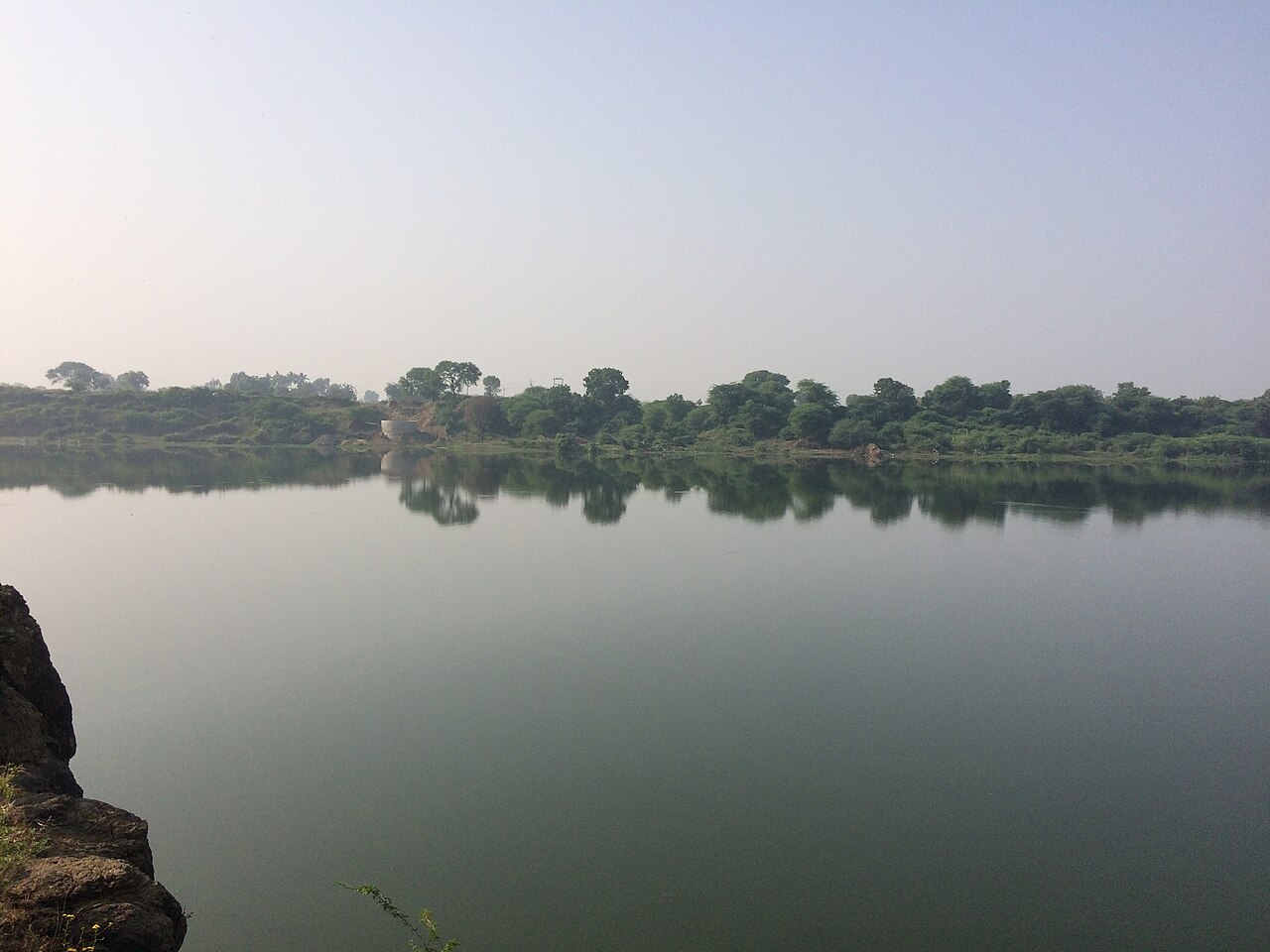
A village of Nandi on the river
Why the Godavari bend was held sacred long before the sultans arrived
The oldest name of the city is Nandigrama — the village of Nandi, the bull-mount of Shiva — or in some local readings Nandi-tat, the bull's bank, where the Godavari makes a wide southern curve before turning east towards the sea. The Marathi Nānded and the Persian Nandair both descend from that root.
Long before any sultan rode south, Nanded was already a market and a pilgrimage stop on the road from Devagiri to Warangal. The Yadavas of Devagiri held the country in the twelfth and thirteenth centuries; copperplate grants from the reigns of Singhana (r. 1200–1247) and Ramachandra (r. 1271–1311) record temple endowments along this stretch of the Godavari. A handful of Hemadpanti shrines, built in the rough black basalt of the Marathwada plateau, still survive in the surrounding villages.
The Khalji invasions ended that order. Ala-ud-din's general Malik Kafur passed through in 1310 on his march to Warangal; in 1318 the Tughluq dynasty reduced the Yadava kingdom to a province. Nanded enters the Indo-Persian record in their administrative registers — a small, riverine town, taxed in cotton and grain.[2]
A frontier between two Deccans
When Nanded sat on the line dividing Gulbarga from Devagiri
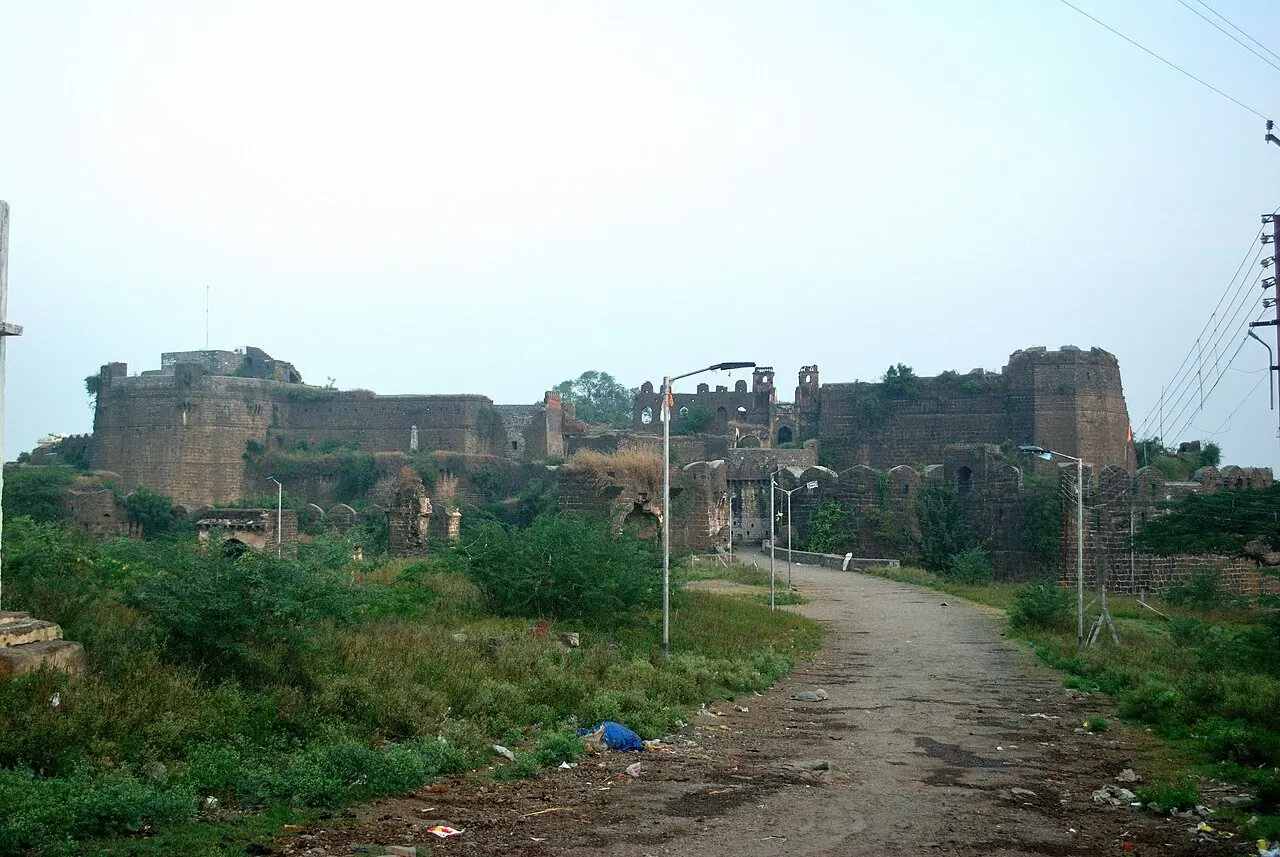
When Alauddin Bahman Shah broke from Delhi in 1347, Nanded fell within his eastern marches. By 1366 the second Bahmani sultan Mohammed Shah I had reduced the country firmly to obedience. The fort at Kandhar — twenty kos to the south, originally a Rashtrakuta foundation — was rebuilt as a Bahmani garrison. It was from Kandhar's ramparts that the sultanate watched the long road from Devagiri to Warangal, the very road on which Nanded was a way-station.
The Bahmani sultanate fragmented at the end of the fifteenth century. Nanded passed to the new Nizam Shahi kingdom of Ahmadnagar, founded by Malik Ahmad in 1490. For nearly a century and a half it was a Nizam Shahi parganah — never large, never a capital, but never neglected. The town acquired a small Sufi establishment around the dargah of Hazrat Sayyid Sarwar Shah, a fifteenth-century Chishti saint, whose urs is still observed in the old quarter.
Shah Jahan's Deccan campaign of 1633 ended Nizam Shahi rule. Nanded, with the rest of the kingdom, passed to the Mughals — and would remain on the seam between Mughal authority and Maratha resurgence for the next century.[3]
Aurangzeb's Deccan at the door
When the empire's centre of gravity shifted to within a week's march of Nanded
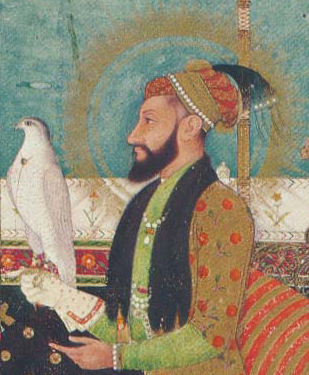
For the second half of the seventeenth century the Mughal emperor was, in fact, hardly ever in Delhi. Aurangzeb spent the years 1681–1707 — the last quarter-century of his reign — in the Deccan, hunting first the Marathas and then the sultanates of Bijapur and Golconda. His moving capital settled for long stretches at Aurangabad, Bahadurgarh, and after 1700 at Khuldabad — all within a few days' ride of Nanded.
Nanded itself was a faujdari headquarters, garrisoned and taxed. The town's Mughal-period fabric is modest — a few mosques, a serai, the small Nagina Ghat on the river — but its significance was strategic. It commanded the Godavari crossings between the imperial camp and the Telangana plateau.
When Aurangzeb died at Ahmadnagar in March 1707, the war of succession that followed brought his son Bahadur Shah I (Mu'azzam) south to consolidate the Deccan. With Bahadur Shah, in the imperial entourage, came an unlikely guest from the Punjab — the tenth Sikh Guru, Gobind Singh, who had pledged a contingent of Khalsa horsemen to the new emperor's cause.[4]
Where the line of living Gurus ended
A fifty-day camp on the Godavari that re-shaped a faith
Guru Gobind Singh — born at Patna in 1666, founder of the Khalsa at Anandpur in 1699 — left the Punjab for the last time in 1707. He had lost his four sons in the Mughal wars; his mother and his fortress at Anandpur were behind him; he travelled with the new emperor's blessing as a free agent, attended by a small Khalsa retinue.
By August 1708 he was at Nanded, on the south bank of the Godavari, in the camp later known as Nanded Sahib. He met there the Bairagi ascetic Madho Das, baptised him into the Khalsa as Banda Singh Bahadur, and despatched him with a hukamnamah and five arrows northward to Punjab — the mission that, eighteen months later, would seize Sirhind.
On the night of 6–7 October 1708, weakened by an assassination attempt some weeks earlier, the Guru summoned his followers to his tent. He placed five paise and a coconut before the Adi Granth, bowed to the volume, and pronounced: "Sab Sikhan ko hukam hai, Guru manyo Granth" — to all Sikhs, the order is given: take the Granth as Guru. With those words he ended the line of personal Gurus that had begun two centuries earlier with Nanak. He died at Nanded on the morning of 7 October 1708. He was forty-one.[1]
A throne built over the cremation ground
From a mud platform in 1708 to one of the five Takhts of the Khalsa
The site of the Guru's cremation, on the bank of the Godavari, was marked first by a simple platform and a screen of cloth. The early eighteenth-century Khalsa called the place Abchalnagar — the city that does not move — and a small congregation of Sikh attendants, many of them descendants of the Guru's bodyguard, settled there permanently. The Hyderabad Asaf Jahi state, into whose territory Nanded fell after 1724, granted them a jagir for the upkeep of the shrine.
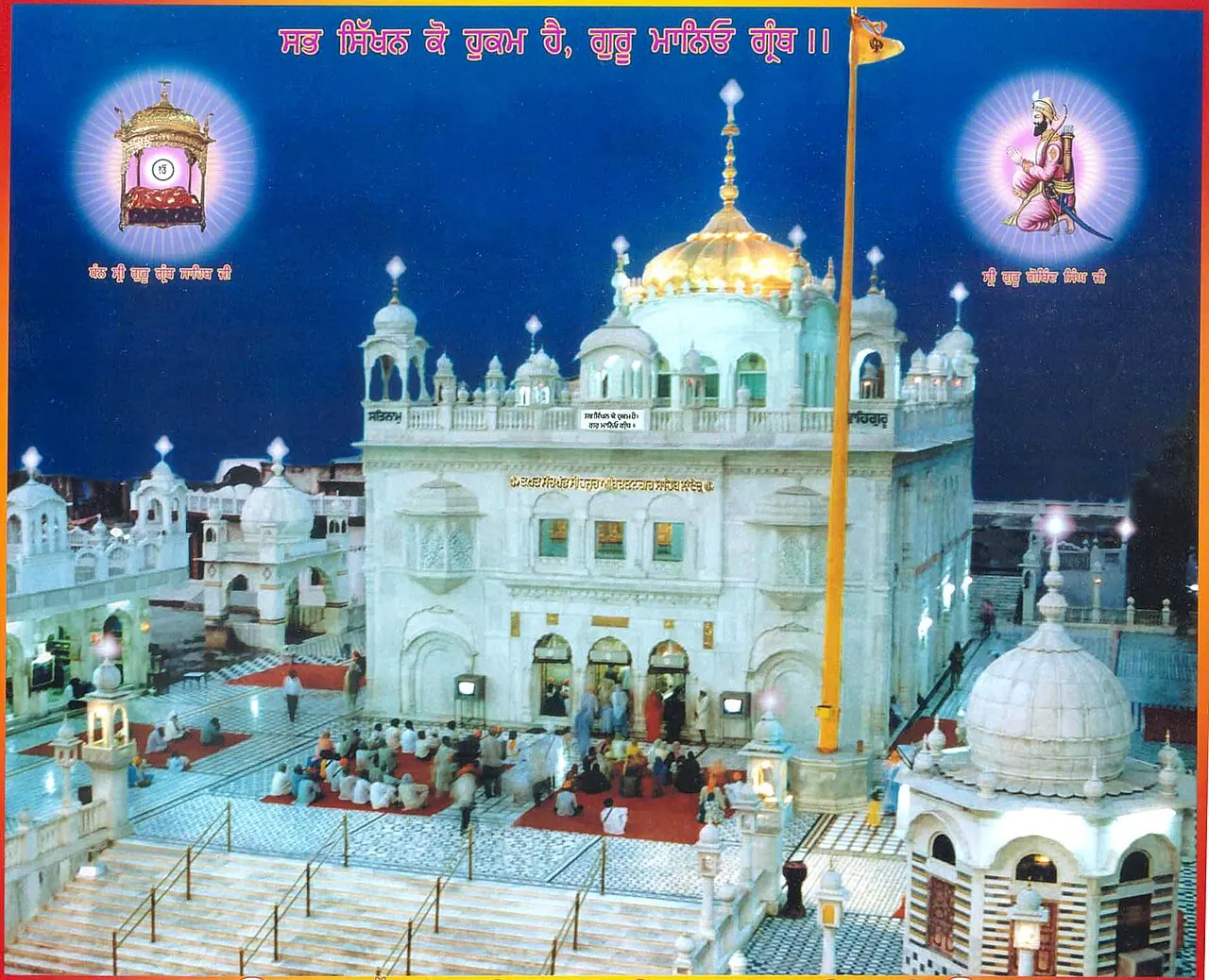
The present marble edifice — the gold-domed Takht Sachkhand Sri Hazur Abchalnagar Sahib — was built between 1832 and 1837 at the order and expense of Maharaja Ranjit Singh of the Sikh Empire, who never visited it but considered its construction one of the chief acts of his reign. The work was carried out by Sikh masons sent from Lahore and supervised on site by Sardar Chanda Singh.
The shrine is one of the Panj Takht — the five seats of temporal authority of the Khalsa Panth — and the only one south of the Vindhyas. The others are at Amritsar, Anandpur, Talwandi Sabo and Patna. To Hazur Sahib, every year in October, several hundred thousand pilgrims travel for the shahidi gurpurab on the anniversary of the Guru's passing.[1]
A Bairagi turned warrior of the Khalsa
The Guru's last commission, despatched from Nanded in September 1708
The most consequential thing the Guru did at Nanded — apart from declaring the Granth eternal Guru — was to commission Banda. Madho Das was a bairagi Vaishnava ascetic of Punjabi origin, settled at Nanded for nearly twenty years in a riverside dera with a reputation for occult powers. The encounter between him and the Guru is among the most retold scenes in Sikh tradition: the ascetic's tricks fail before the Guru's calm; he asks to be the Guru's banda, his slave, and is taken into the Khalsa instead.
Within weeks of the Guru's death the new Banda Singh Bahadur was riding north with his five arrows and his commission. The campaign that followed, between 1709 and 1715, was the first armed answer of the Khalsa to its Mughal persecutors and the first appearance of a Sikh state in the Sirhind country. It was, in every sense, made at Nanded.
Banda's old dera, on the western edge of the modern town, is still pointed out as the Banda Ghat. It is one of nine secondary historical gurdwaras in the Nanded sangat — collectively known as the nau-ghats — that mark stages of the Guru's two months on the Godavari.

A district of the Nizam's dominions
From the founding of Hyderabad State to Operation Polo and Maharashtra
When Mir Qamar-ud-Din Khan, Asaf Jah I, broke from the failing Mughal centre in 1724 and made the Deccan his hereditary nizamat, Nanded passed quietly into Hyderabad State. It would remain so for two and a quarter centuries — a Marathwada district under subadars appointed from the Char Minar, sending its grain and cotton to the Hyderabad treasury and its scholars to the Dar-ul-Uloom and the Nizam's College.
The Asaf Jahis honoured Hazur Sahib continuously. The fifth Nizam, Afzal-ud-Daula (r. 1857–1869), confirmed the gurdwara's old jagir by farman; the seventh, Mir Osman Ali Khan (r. 1911–1948), endowed a major repair of the dome in 1936 and again contributed to the rebuilding of the boundary wall. The state's Sikh subjects were a small but visible minority; the Hyderabad cavalry included a Sikh troop down to 1948.
On 17 September 1948, with Operation Polo, Hyderabad State acceded to the Indian Union. Nanded passed first into Hyderabad State (Indian) and then, with the States Reorganisation Act of 1956, into Bombay State.[5] In 1960 it became part of the new state of Maharashtra and the cultural capital of its Marathwada region, which it remains.
سب سکّھن کو حُکم ہے، گُرو مانیو گرنتھ
"To all Sikhs, the order is given:
take the Granth as Guru."
— Guru Gobind Singh, at Nanded · 7 October 1708
From Nandigrama to Abchalnagar to Maharashtra
- c. 1200Yadava grants record temple endowments along the Godavari at Nandigrama; Hemadpanti shrines built in surrounding villages.
- 1318Tughluq conquest of the Yadava kingdom; Nanded becomes a small iqta in the new Delhi province of the Deccan.
- 1347Alauddin Bahman Shah breaks from Delhi; the eastern Marathwada country, including Nanded, falls within the new Bahmani sultanate's marches.
- 1366Mohammed Shah I rebuilds the fort at Kandhar, twenty kos south of Nanded, as the chief Bahmani garrison on the Godavari.
- 1490Bahmani fragmentation; Nanded passes to the Nizam Shahi sultanate of Ahmadnagar under Malik Ahmad.
- 1633Shah Jahan's Deccan campaign ends Nizam Shahi rule; Nanded becomes a Mughal faujdari.
- 1681Aurangzeb shifts his capital permanently to the Deccan; Nanded a few days' march from the imperial camp.
- 3 March 1707Death of Aurangzeb at Ahmadnagar; Bahadur Shah I marches south for the war of succession, accompanied by Guru Gobind Singh and a Khalsa contingent.
- August 1708Guru Gobind Singh reaches Nanded and pitches camp on the south bank of the Godavari.
- Sept 1708The Guru initiates the Bairagi Madho Das as Banda Singh Bahadur and despatches him to the Punjab with a hukamnamah and five arrows.
- 7 Oct 1708Death of Guru Gobind Singh at Nanded; he names the Adi Granth eternal Guru of the Sikhs (Guru manyo Granth).[1]
- 12 May 1710Banda Singh Bahadur defeats Wazir Khan at Chappar Chiri and storms Sirhind — the first Khalsa victory in the field.
- 1716Banda is captured at Gurdas-Nangal and martyred at Delhi; the Sirhind state he founded falls.
- 1724Asaf Jah I founds the Hyderabad State; Nanded a district within it for the next two and a quarter centuries.
- 1832–1837Maharaja Ranjit Singh of Lahore funds and builds the present marble shrine of Takht Sachkhand Sri Hazur Abchalnagar Sahib over the cremation site.[1]
- 1936Mir Osman Ali Khan, the seventh Nizam, endows a restoration of the gold dome.
- 17 Sept 1948Operation Polo concludes; Nanded accedes to the Indian Union with the rest of Hyderabad State.
- 1 Nov 1956States Reorganisation places Nanded in Bombay State, separating it from Hyderabad State for the first time in 232 years.
- 1 May 1960Bombay State is partitioned; Nanded joins the new state of Maharashtra as the cultural seat of the Marathwada region.
- 2008Tercentenary of the death of Guru Gobind Singh and of Guru manyo Granth; some thirty lakh pilgrims gather at Hazur Sahib.
References
- ^ ^ ^ ^ ^ Government of Maharashtra, Department of Tourism, "Hazur Sahib Gurudwara." ↗
- ^ H. K. Sherwani & P. M. Joshi (eds.), History of Medieval Deccan (1295–1724), 2 vols., Government of Andhra Pradesh, Hyderabad, 1973–74.
- ^ Richard M. Eaton, A Social History of the Deccan, 1300–1761: Eight Indian Lives, Cambridge University Press, 2005.
- ^ John F. Richards, The Mughal Empire (The New Cambridge History of India I.5), Cambridge University Press, 1993.
- ^ Omar Khalidi (ed.), Hyderabad: After the Fall, Hyderabad Historical Society, Wichita, 1988.
Compiled and edited by Syed Azhar Farhan for Dakhni.org from the sources cited on this page. AI may assist research and drafting; see the editorial method, corrections log, and AI policy.
Comments
Comments are provided by Disqus. Loading them shares your visit with Disqus.