Home›Sufism in the Deccan›Shah Khamosh
The silent saint of the Asaf Jahi capital
A Sayyid of the Qadiri-Naqshbandi line who shunned all unnecessary speech
Hazrat Sayyid Shah Khamosh — known by the epithet Khamosh ("the silent one") for his lifelong practice of avoiding all unnecessary speech — was a Sayyid scholar and Sufi who lived at Hyderabad during the founding decades of the Asaf Jahi state, and who died at the city in 1153 AH / 1740 CE during the reign of Asaf Jah I. His lineage placed him in the combined Qadiri-Naqshbandi silsila that was particularly characteristic of Hyderabad in this period.[1]
A discipline of silence
Teaching in writing, a single evening meal, and the counsel of a Nizam
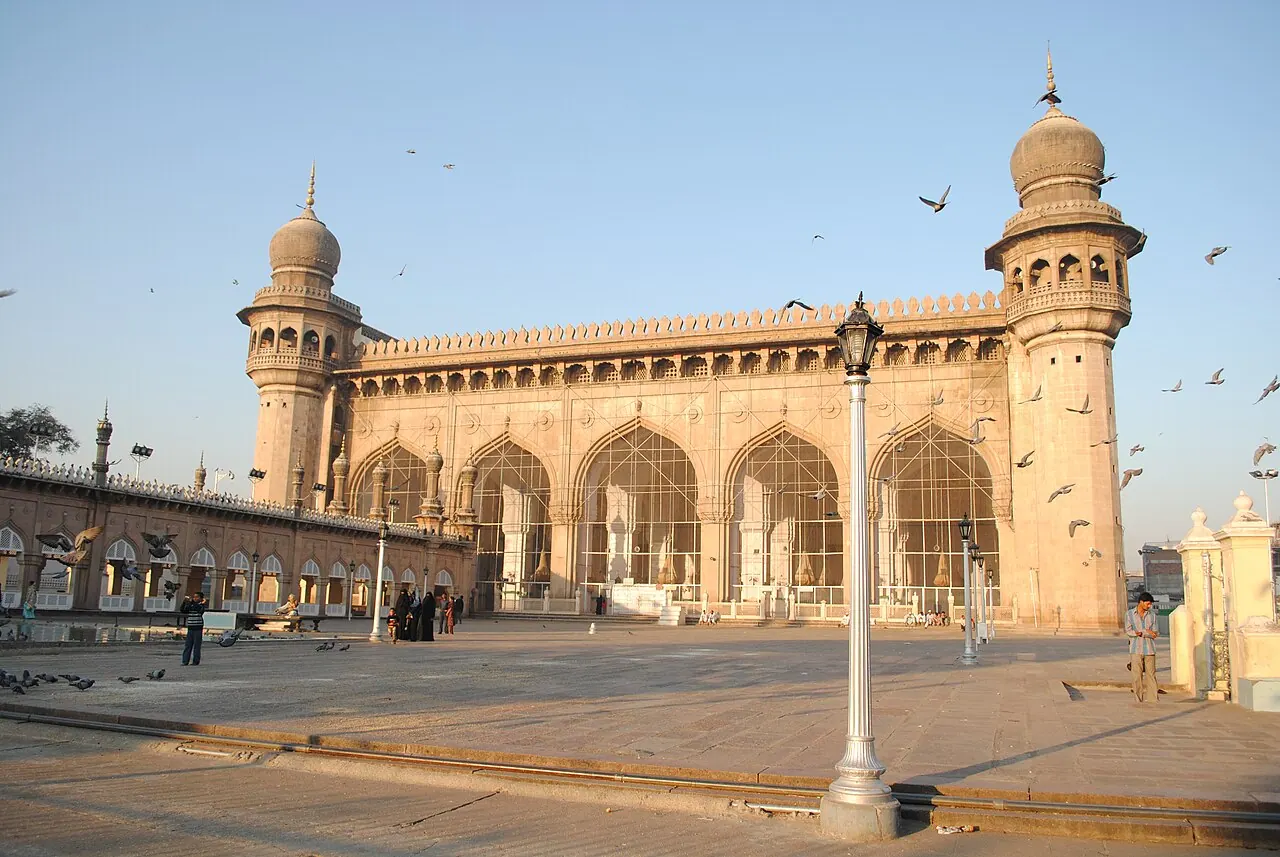
His method was unusually austere even by Sufi standards. He kept his hospice in the old city near the Mecca Masjid, taught a small circle of disciples in writing rather than speech, restricted his meals to a single late-evening serving, and was reputed never to have undertaken any worldly transaction. Asaf Jah I, the founder of Hyderabad State, is recorded in the early state chronicles as having visited him repeatedly for counsel; the Nizam's regard for the saint is said to have influenced the patronage extended to Hyderabad's Sufi institutions in the first generation of Asaf Jahi rule.[1]
A shrine kept in silence
Where pilgrims still sit in the discipline the saint himself observed
His tomb in the old city is one of the smaller but most carefully tended of Hyderabad's dargahs. Pilgrims sit there in the discipline of silence the saint himself observed — a practice unusual in the otherwise vocal qawwali culture of the city. His name appears in the formal silsila records of the Hyderabad Naqshbandi-Qadiri line and his discourses, transcribed by disciples in his lifetime, were collected and published in Urdu in the late nineteenth century under the title Malfuzat-i-Khamosh.[3]
Shah Khamosh in dates
- Early 18th c.Born a Sayyid; receives initiation in the combined Naqshbandi-Qadiri silsila, the path particularly characteristic of Hyderabad in this period.
- c. 1724Active in Hyderabad during the founding decades of the Asaf Jahi state; the city is establishing itself as the new political and spiritual capital of the Deccan under Asaf Jah I.
- c. 1724–1740Establishes his hospice in the old city near the Mecca Masjid; earns the epithet Khamosh — 'the silent one' — for his lifelong practice of avoiding all unnecessary speech.
- c. 1724–1740Teaches a small circle of disciples through writing rather than speech; observes an unusually austere regimen, restricting himself to a single late-evening meal and avoiding all worldly transactions.
- c. 1724–1740Asaf Jah I, the founder of Hyderabad State, visits him repeatedly for counsel; the Nizam's regard is said to have shaped his patronage of Hyderabad's Sufi institutions in the first generation of Asaf Jahi rule.
- 1740Dies at Hyderabad (1153 AH) during the reign of Asaf Jah I; buried in the old city near the site of his hospice.[2]
- Post-1740His tomb becomes one of the smaller but most carefully tended dargahs of Hyderabad; pilgrims observe the discipline of silence at the shrine in keeping with the saint's own practice.
- Late 19th c.Discourses transcribed by his disciples during his lifetime are collected and published in Urdu under the title Malfuzat-i-Khamosh, preserving his teachings for later generations.
- OngoingThe dargah remains an active site in the old city; Shah Khamosh's name is carried in the formal silsila records of the Hyderabad Naqshbandi-Qadiri tradition.
References
- ^ ^ ^ Richard M. Eaton, A Social History of the Deccan, 1300–1761: Eight Indian Lives, Cambridge University Press, 2005.
- ^ ^ H. K. Sherwani & P. M. Joshi (eds.), History of Medieval Deccan (1295–1724), 2 vols., Government of Andhra Pradesh, Hyderabad, 1973–74.
- ^ Richard M. Eaton, Sufis of Bijapur, 1300–1700: Social Roles of Sufis in Medieval India, Princeton University Press, 1978.
Compiled and edited by Syed Azhar Farhan for Dakhni.org from the sources cited on this page. AI may assist research and drafting; see the editorial method, corrections log, and AI policy.
Comments
Comments are provided by Disqus. Loading them shares your visit with Disqus.