Home›Cities of the Deccan›Aurangabad
An Ethiopian regent lays out Khadki
Malik Ambar, slave-turned-prime-minister of the Nizam Shahis, founds a new capital
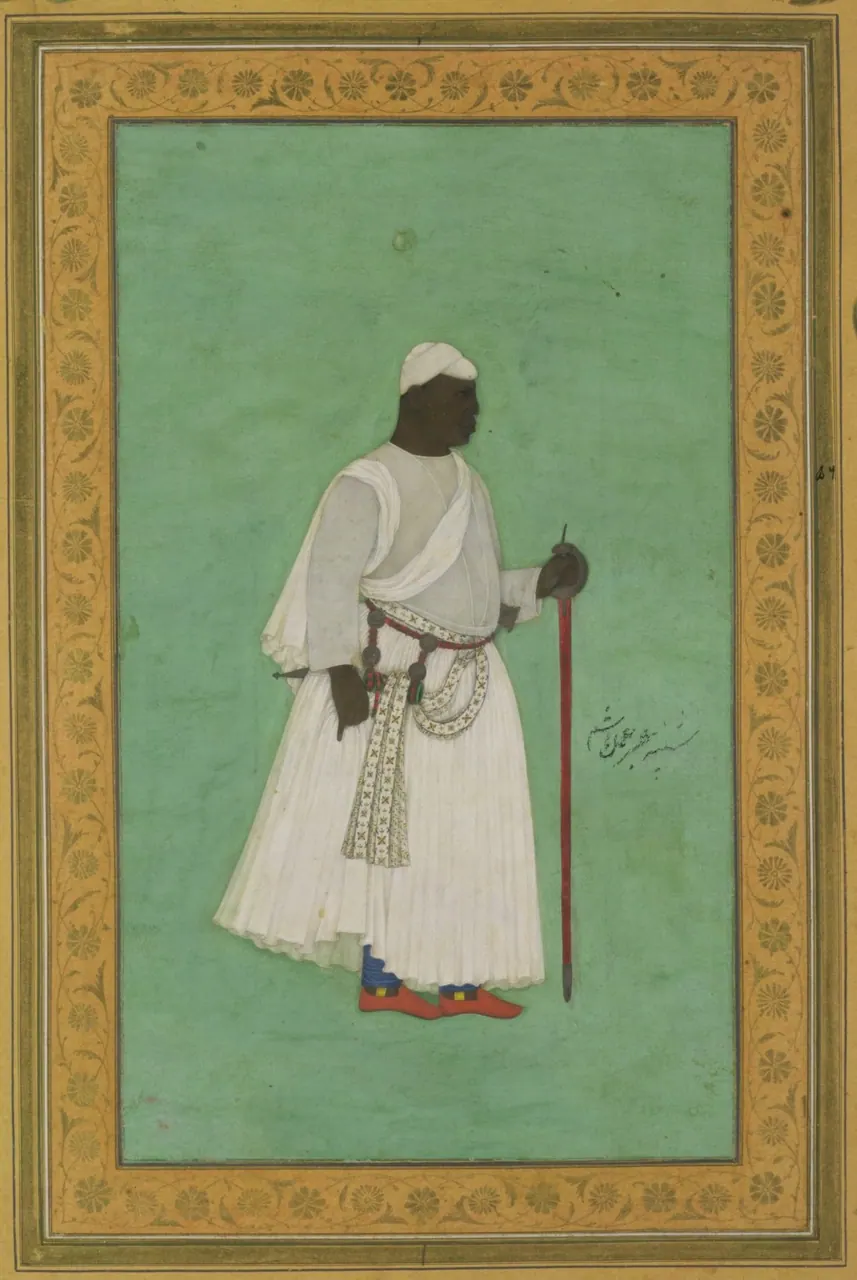
The story of the city begins not with a sultan but with an extraordinary slave. Malik Ambar was born around 1548 in the Hararghe highlands of Ethiopia, named Chapu, sold first to an Arab trader at Mocha, then to a Baghdadi merchant who taught him Arabic and finance, and finally — by way of the slave market at Bijapur — to the Nizam Shahi state of Ahmadnagar. By 1600 he was a free man, the chief commander of its Habshi (Abyssinian) cavalry; by 1602 he was its peshwa, prime minister; and from 1607 until his death in 1626 he was, in effect, sovereign of what remained of the kingdom — running it on behalf of three child-sultans and successfully holding off the Mughal armies of Akbar and Jahangir for a generation.
In 1610, with the old capital of Ahmadnagar exposed and indefensible, Malik Ambar moved his court to a fertile plain in the lee of the Sahyadri foothills, on the small village of Khadki (also spelt Khirki, "the window"). He laid out a planned city of orthogonal quarters, dug a system of underground stone aqueducts — the Nahr-e-Ambari — that brought water from the Harsul stream, and built a modest court and a handful of mosques. The plan was, like the man, sober, careful and exact. After his death in 1626 his son Fateh Khan briefly renamed the city Fatehnagar; the Nizam Shahis lost it to the Mughals only seven years later, in 1633.
Malik Ambar was buried at Khuldabad, twenty kilometres west — and so today, the founder of Aurangabad and the emperor who renamed it are both buried in the wider sacred landscape of Khuldabad, but not in the same compound.[1]
Aurangzeb takes the city for his name
Prince, then emperor — half a century of rule from this plain
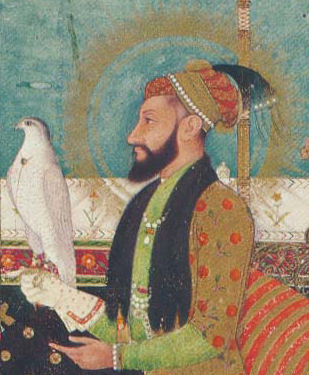
Mughal forces took Fatehnagar in 1633 in the campaign that ended the Nizam Shahi state. The young prince Aurangzeb Alamgir was given the Deccan as a vice-royalty in 1636, lost it to his brothers' factions, and got it back in 1652. On 2 May 1653, in his second viceroyalty, he formally renamed the city Aurangabad — "the place of Aurangzeb" — and made it the principal Mughal seat south of the Narmada.
It was here, in the gardens just east of the city, that he received the news of his father Shah Jahan's illness in 1657 and resolved on the war of succession against Dara Shukoh that ended at Samugarh and gave him the throne in 1658. From Delhi he ruled the empire for the next twenty-three years; but from 1681 he came back south — and never returned. He spent the last twenty-six years of his life campaigning against the Marathas and the Adil Shahis from a great moving tent-city outside Aurangabad's walls. The grain markets of the city supplied a vast Mughal field army; the cantonment beyond the Bhadkal Gate was as large as the city itself.
The city's character was set by his court. The bureaucracy spoke Persian; the army spoke Dakhni and Marathi; the bazaars spoke a half-dozen tongues. The Bawan Darwaza ("fifty-two gates"), built progressively between 1610 and the late 1690s — of which fifteen survive, including the four cardinal gates of Delhi, Mecca, Bhadkal and Roshan — gave the city its old name in popular memory: the Shaher of fifty-two gates.[2]
The Taj of the Deccan
Azam Shah builds for Dilras Banu Begum on a budget of seven lakhs
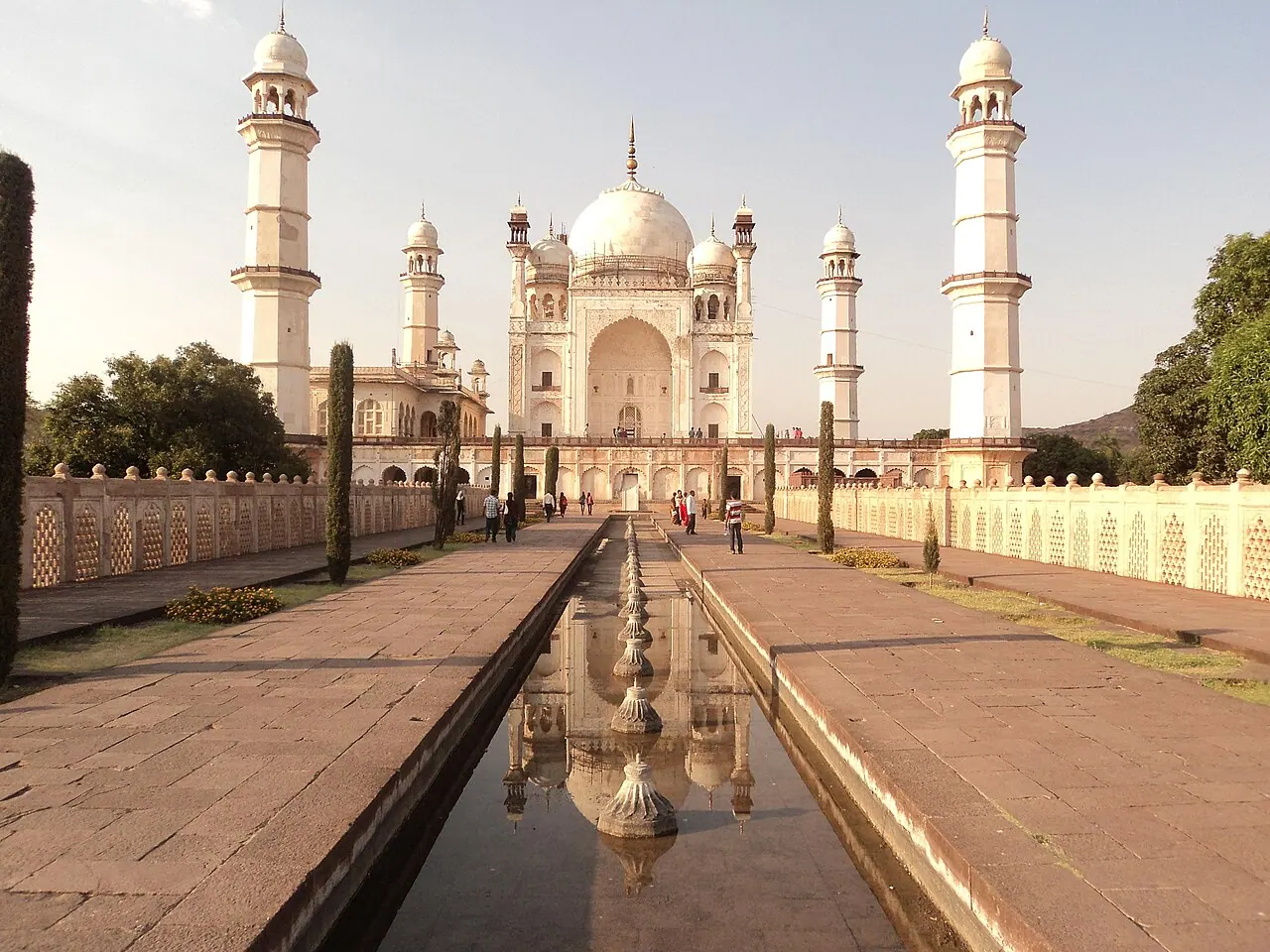
Of all the monuments of Aurangabad the one that has fixed the city in the imagination is the Bibi ka Maqbara — "the tomb of the lady" — a near-replica of the Taj Mahal raised over the grave of Dilras Banu Begum, principal wife of Aurangzeb and mother of his eldest son Muhammad Azam Shah. She had died in 1657, four days after the birth of her sixth child, and was buried first at Daulatabad. In 1660, on the orders of the prince and (it is said) at his own emotional insistence, work began on a new mausoleum within the eastern garden of Aurangabad. It was completed in 1661 — though the marble cladding continued for decades.
The architect was Ata-ullah, son of the Ustad Ahmad Lahori who had designed the Taj. The plan is the same: a four-iwan mausoleum on a square chabutra, four minarets at the corners, a great central dome on a tall drum, set within a charbagh of running channels. The dimensions are smaller — about two-thirds the height of the original — and the construction shows the empire's tightening finances: only the lower five metres are clad in true marble, the upper bulk is faced in fine plaster polished to a marble sheen, the inlays are sparser and the floral relief is in stucco rather than pietra dura. The accounts famously record the total cost as Rs 7,00,000, against the Rs 32 million that the Taj had absorbed thirty years earlier.
For all that — perhaps because of it — the Bibi ka Maqbara has a tenderness the Taj lacks. The proportions are slightly compressed, the dome a little flatter, the gardens more intimate; the moulding is in the local Deccan idiom, the calligraphy is by a Bijapuri hand, the gates open onto orchards rather than river-front. It was, and remains, a private grief made monumental — a son's offering rather than an emperor's. Hyderabadis still call it the Dakkhani Taj.[3]
A water-mill for the poor of the dargah
Six kilometres of buried siphon, ending in a single brass wheel
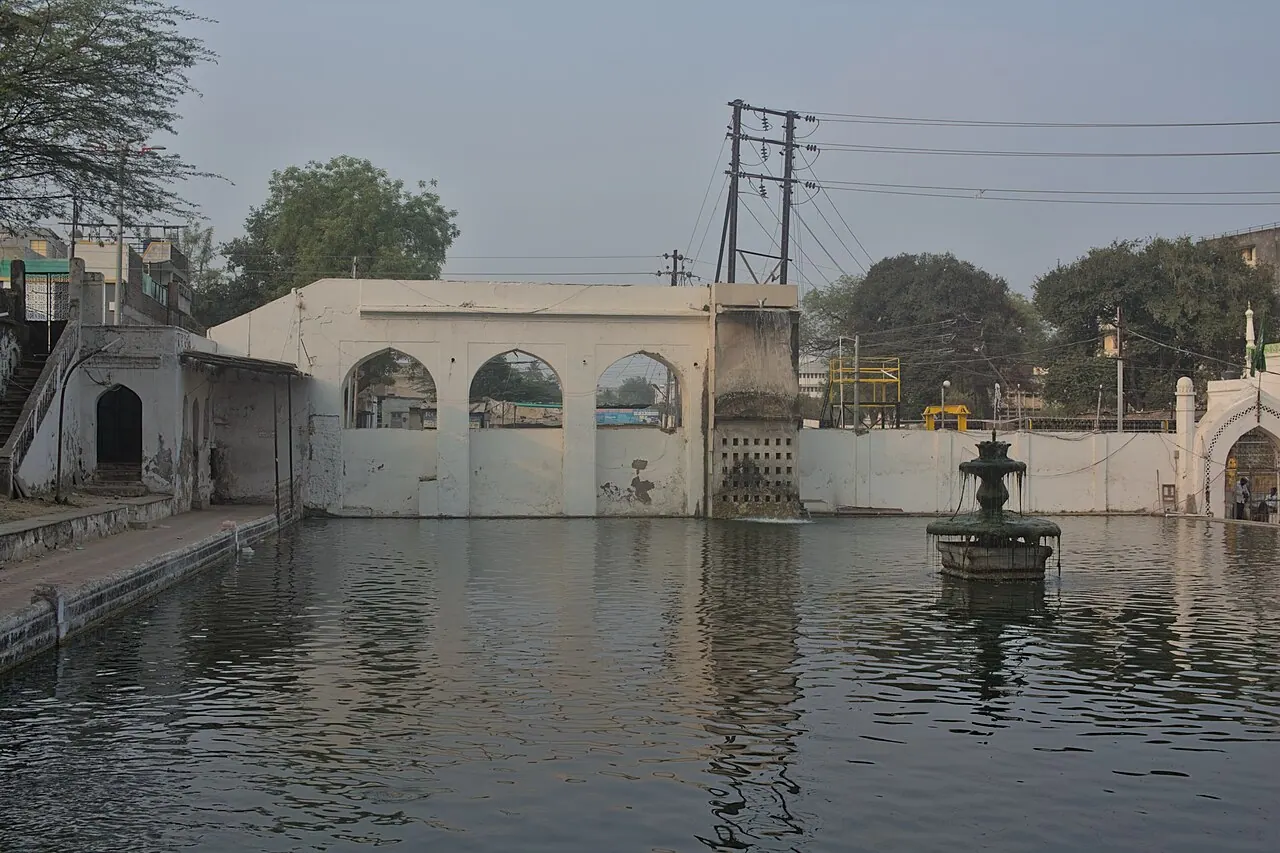
Just outside the old city, where the Kham river curves around the shrine of the Naqshbandi saint Baba Shah Musafir (d. 1715), stands the Panchakki — literally "five-mill," after the five subsidiary stones it once turned. The structure was completed around 1695 by the saint's principal disciple, Jamil Beg al-Husaini, with a stipend from Aurangzeb's treasury. Its purpose was charitable: to grind, free of charge, the wheat for the langar (free kitchen) of the dargah, which fed up to a thousand wandering dervishes and pilgrims a day.
The engineering is the marvel. Water is drawn from a perennial spring in the hills six kilometres to the north-east — the same spring Malik Ambar had tapped a century earlier — and led entirely underground in a series of stone-lined siphons and inverted aqueducts to the precinct of the mill, where it emerges at pressure into a holding cistern, falls a clear sixteen metres into a paddle-wheel chamber and turns the millstones below. The cascade discharges into a great rectangular tank shaded by a single banyan tree planted at its founding — said now to be the largest banyan in old Aurangabad, with a girth of nearly twenty metres.
The mill is not, structurally, monumental. It is a low rubble building, plastered and whitewashed, with a covered arcade along its western side. But it is the most complete surviving example of pre-modern Deccan hydraulic engineering, and it has worked, on and off, for three hundred and thirty years.[2]
The unconquered hill of Devgiri
Six hundred metres of basalt — and the Tughluq capital that never was
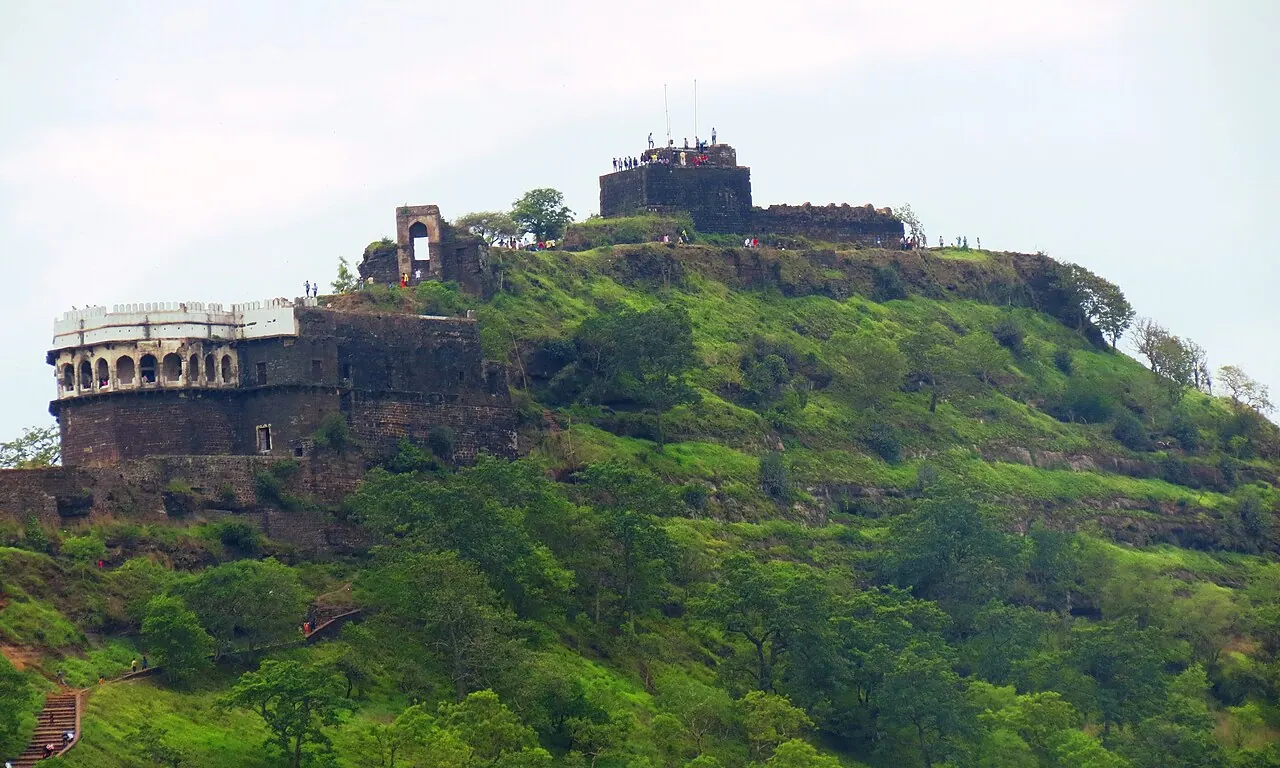
Sixteen kilometres west of Aurangabad rises the conical hill of Devgiri — a single basalt plug six hundred metres high, scarped to a vertical cliff on three sides — which has been a fortress without interruption since at least the ninth century. Under the Yadavas of Devagiri (1187–1317) it was the richest city of the western Deccan, controlling the trade between Gujarat and the Krishna delta. Alauddin Khalji sacked it in 1294 and again in 1308. Muhammad bin Tughluq, finding the site so naturally defensible, refounded it in 1327 as Daulatabad ("city of fortune") and ordered the entire population of Delhi marched there to make it the new imperial capital — an experiment in compulsory urbanism that lasted a generation and ended in famine and abandonment.
The fort itself is a cumulative work. The Yadavas cut its scarp and dug its great moat — fifteen metres wide, partly flooded, partly populated (it is said) with crocodiles. The Tughluqs added a second concentric circuit of walls, the Bahmanis a third, and built the surviving Chand Minar in 1435 — a cylindrical victory tower thirty metres high with three balconies, the second-tallest pre-Mughal minaret in India. The pitch-black tunnel ("the dark passage") that wraps around the citadel's last approach, with its single-file staircase that can be choked by closing one iron grille, has never been forced by any besieging army.
Aurangzeb made Daulatabad his treasure-house and prison; Sambhaji, son of Shivaji, was held here in 1689 before being executed. After 1707 it passed into Asaf Jahi hands, whose first sovereign Nizam-ul-Mulk used it as the strongest place of his realm before settling on Hyderabad.[2]
An emperor in a simple grave
Fourteen Sufi shrines, the Asaf Jahi Nizams — and Aurangzeb himself
Three kilometres west of Daulatabad, on a ridge that the Marathas of Shivaji called Rauza, is the small walled town of Khuldabad — "the abode of eternity." It became a centre of Chishti Sufism in the early fourteenth century when Burhanuddin Gharib (d. 1337), the chief disciple of Nizamuddin Auliya, was sent south by his master to teach in the Deccan. He settled here, his brother and a generation of fellow disciples followed, and within a century the town held fourteen dargahs of major Chishti and other saints, around which the Bahmani and Adil Shahi nobility chose to be buried.
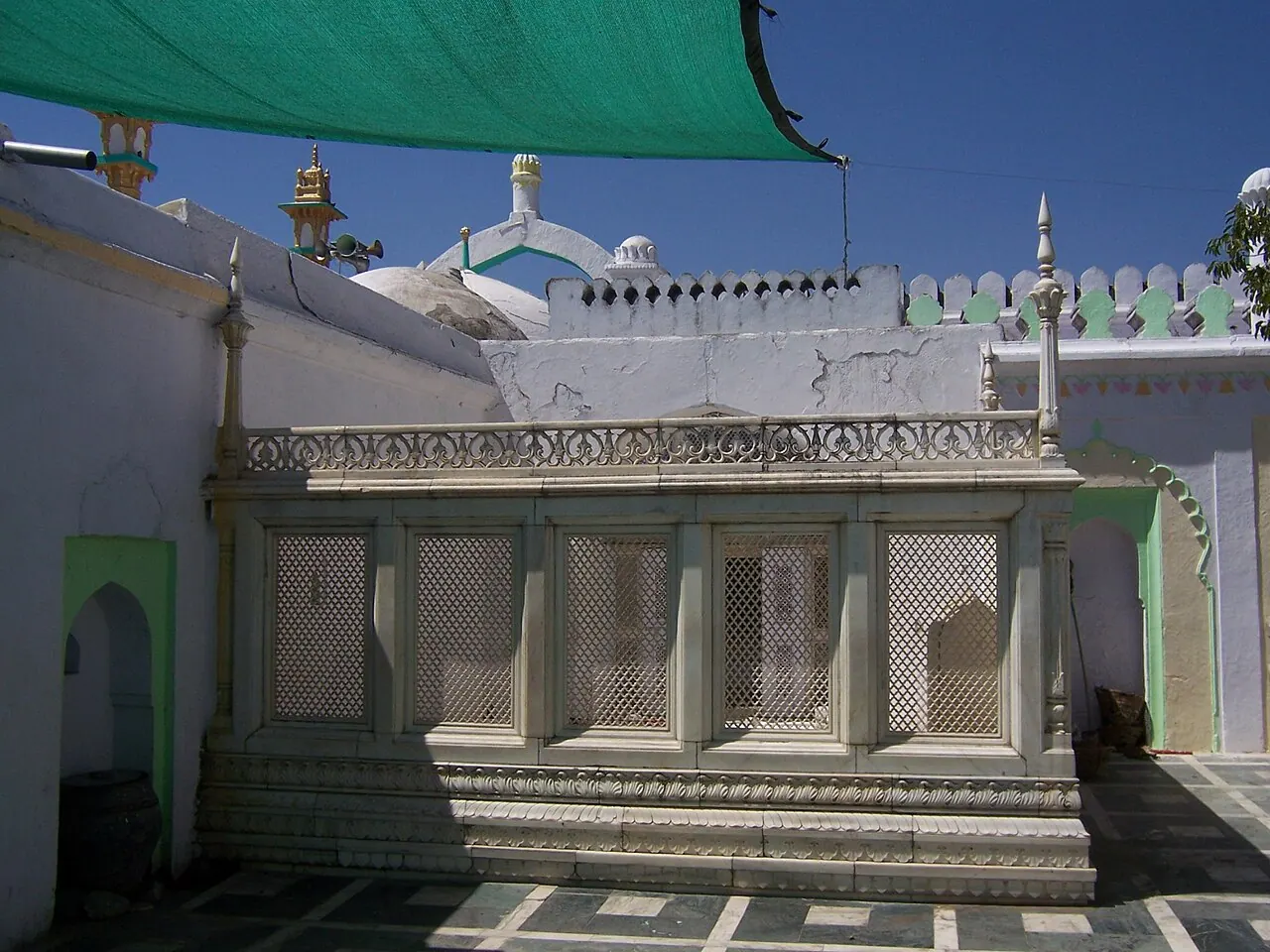
It is here that Aurangzeb, who died at Ahmadnagar on 3 March 1707 in his eighty-ninth year, asked to be brought. His will, in his own hand, ordered that his tomb be open to the sky and unadorned, that it be paid for from the four rupees and two annas he had earned by transcribing copies of the Qur'an and from a small sum he had earned by sewing prayer caps, and that no expense fall on the public treasury. The grave is a low marble platform some two metres long, its head-stone the only marker; on it grows a single tulsi plant, planted in the Maratha period. A simple courtyard, added by the seventh Nizam in 1921 from his private purse, surrounds it. He was the most powerful Mughal sovereign of all and is buried in the most modest of all Mughal graves.[2]
Beside him lie his second son Azam Shah (d. 1707, killed at Jajau weeks after his father), the Nizam-ul-Mulk Asaf Jah I (d. 1748), the second Nizam Nasir Jang, and the great Sufi Sayyid Yusuf-ud-Din (d. 1330) — together making Khuldabad the densest single ground of Deccan Sufi and dynastic history.
A landscape of caves
Ajanta, Ellora and the Aurangabad caves on the city's hill
No account of Aurangabad is complete without its older inheritance. Within a hundred kilometres of the city are three of the great rock-cut complexes of the world.
The Ajanta Caves, a hundred kilometres north-east, are twenty-nine Buddhist excavations carved into a horseshoe of basalt above the Waghora river between roughly 200 BCE and 480 CE. They were lost to memory until 1819, when a young British officer named John Smith, hunting tigers, walked his horse onto the rim of the gorge and saw the chaitya-hall of cave 10 framed in vegetation. Their wall-paintings — Bodhisattva Padmapani, the Mahajanaka Jataka, the four-tusked elephant of cave 17 — are the largest surviving body of Indian wall-painting before the Mughal period.
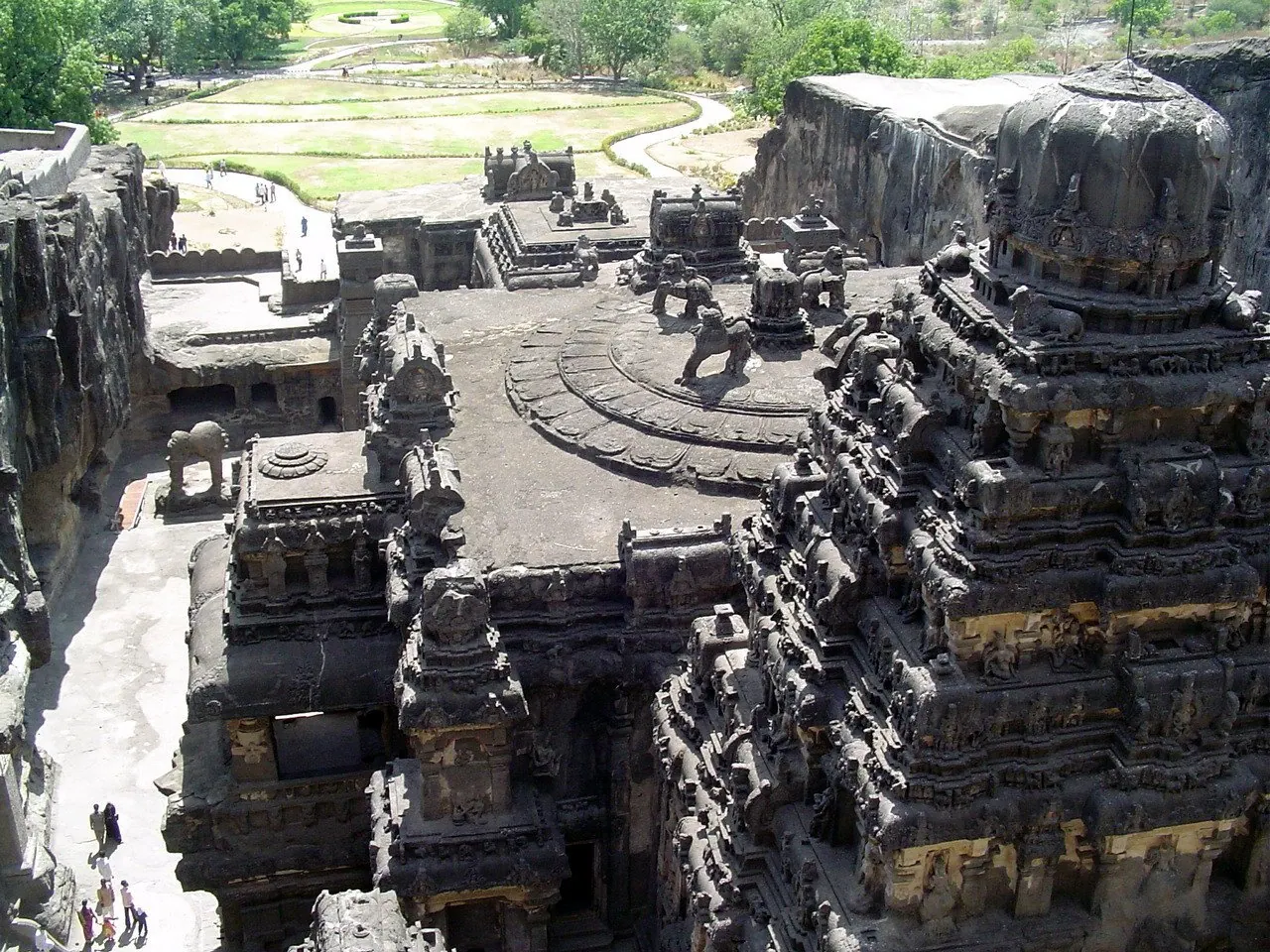
The Ellora Caves, only thirty kilometres west of Aurangabad, are a continuous twenty-nine-kilometre cliff with thirty-four cut-temples carved between the sixth and the tenth centuries CE. They are unique in housing Buddhist (caves 1–12), Hindu (13–29) and Jain (30–34) shrines side by side, the eclectic patronage of the Rashtrakuta dynasty. The Kailasa Temple (cave 16), commissioned by Krishna I around 760, is a single freestanding multi-storey temple cut downwards from the parent cliff — the largest monolithic excavation in the world, with two hundred thousand tonnes of basalt removed by hand.
The Aurangabad Caves themselves, on the hill above the Bibi ka Maqbara, are nine Mahayana Buddhist excavations of the sixth and seventh centuries, modest in scale but with a celebrated frieze of musicians and dancers in cave 7. They were already silent before Malik Ambar laid out the city beneath them.[4]
Where the Nizams began
From Mir Qamar-ud-Din to the move to Hyderabad in 1763
Aurangzeb's death at Ahmadnagar in 1707 effectively ended the Mughal hold on the Deccan. The empire fragmented; the official Mughal viceroy of the Deccan, Mir Qamar-ud-Din Khan, fought a series of campaigns in the 1720s that secured his de facto independence — confirmed at the Battle of Shakarkheda in 1724 — and which established him as Nizam-ul-Mulk, founder of the Asaf Jahi dynasty. He took Aurangabad as his seat. The first Nizam ruled from this city for almost a quarter-century, was buried beside Aurangzeb at Khuldabad in 1748, and the Asaf Jahi state remained centred here through the bloody succession years that followed.
It was only in 1763, after the wars with the Marathas and the French, that the second Nizam Asaf Jah II moved his durbar to Hyderabad. Aurangabad continued as the capital of the western subah of the dominions and remained heavily Mughal in flavour — its Persian-speaking nobility, its Dakhni-speaking artisans, its Marathi-speaking peasantry — for another century and a half. It was ceded to the British-administered Hyderabad State, accessioned to India along with the rest in 1948, and made part of the new Marathi-speaking state of Maharashtra at the 1956 reorganisation.
In 2023 the Government of Maharashtra renamed the city Chhatrapati Sambhajinagar, after the Maratha king Sambhaji whom Aurangzeb had executed at Tulapur in 1689. The two names — Aurangabad and Sambhajinagar — now sit side by side on the platform boards of the old kachehri, a quiet record of the city's twin inheritances.[1]
جس نے بیبی کا مقبرہ بنایا، ماں کے واسطے،
اور جس نے قبرِ عالمگیر کو، آسمان کی چھت دی
"He who built the Bibi ka Maqbara — for a mother;
and he whose own grave was given the sky as its roof."
— A Khuldabad couplet, oral tradition
Aurangabad in dates
- 2nd c. BCEFirst excavations of the Ajanta caves above the Waghora river under the Satavahana dynasty.
- c. 760 CEKrishna I of the Rashtrakutas commissions the Kailasa Temple at Ellora — the largest monolithic temple in the world.
- 1187Bhillama V of the Yadavas founds his capital at Devgiri.
- 1294Alauddin Khalji's first sack of Devgiri — the first Delhi-Sultanate raid into the Deccan.
- 1327Muhammad bin Tughluq renames the captured fort Daulatabad and orders the population of Delhi marched south.
- 1435Bahmani sultan Ahmad Shah I builds the Chand Minar at Daulatabad to mark the conquest.
- 1610Malik Ambar founds Khadki on the plain east of Daulatabad as the new Nizam Shahi capital.
- 1626Death of Malik Ambar; buried at Khuldabad. His son Fateh Khan briefly renames the city Fatehnagar.
- 1633Mughal armies of Shah Jahan capture Fatehnagar; the Nizam Shahi dynasty ends.
- 1636Prince Aurangzeb is appointed first Mughal viceroy of the Deccan, with his seat at Fatehnagar.
- 2 May 1653Aurangzeb formally renames the city Aurangabad in his second viceroyalty.
- 1657Death of Dilras Banu Begum, principal wife of Aurangzeb and mother of Azam Shah.
- 1661Completion of the Bibi ka Maqbara by Prince Azam Shah, designed by Ata-ullah, son of the architect of the Taj.
- 1681Aurangzeb shifts the imperial court permanently to the Deccan; Aurangabad becomes the working Mughal capital.
- 1689Sambhaji, son of Shivaji, executed at Tulapur after capture; held briefly at Daulatabad.
- c. 1695Completion of the Panchakki by Jamil Beg al-Husaini, disciple of Baba Shah Musafir.
- 3 March 1707Death of Aurangzeb at Ahmadnagar at the age of 88; buried at Khuldabad in an open grave by his own command.[2]
- 1724Mir Qamar-ud-Din, Nizam-ul-Mulk Asaf Jah I, takes effective independence and makes Aurangabad his capital.
- 1748Death of Asaf Jah I; he is buried beside Aurangzeb at Khuldabad.
- 1763Nizam Ali Khan (Asaf Jah II) shifts the durbar from Aurangabad to Hyderabad.
- 1819John Smith of the Madras Cavalry rediscovers the lost Ajanta caves while hunting tigers in the gorge.[4]
- 17 Sept 1948Operation Polo: Hyderabad State accedes to the Indian Union; Aurangabad with it.
- 1 Nov 1956Aurangabad transferred from Hyderabad State to the new bilingual Bombay State, then in 1960 to Maharashtra.
- 2023The city is officially renamed Chhatrapati Sambhajinagar; the older name Aurangabad survives in popular and historical use.
References
- ^ ^ ^ Richard M. Eaton, A Social History of the Deccan, 1300–1761: Eight Indian Lives, Cambridge University Press, 2005 — ch. 5, "Malik Ambar (1548–1626): The Rise and Fall of Military Slavery."
- ^ ^ ^ ^ ^ John F. Richards, The Mughal Empire (The New Cambridge History of India I.5), Cambridge University Press, 1993.
- ^ George Michell & Mark Zebrowski, Architecture and Art of the Deccan Sultanates (The New Cambridge History of India I.7), Cambridge University Press, 1999.
- ^ ^ UNESCO World Heritage List, "Ajanta Caves" and "Ellora Caves" (both inscribed 1983). ↗
Compiled and edited by Syed Azhar Farhan for Dakhni.org from the sources cited on this page. AI may assist research and drafting; see the editorial method, corrections log, and AI policy.
Comments
Comments are provided by Disqus. Loading them shares your visit with Disqus.